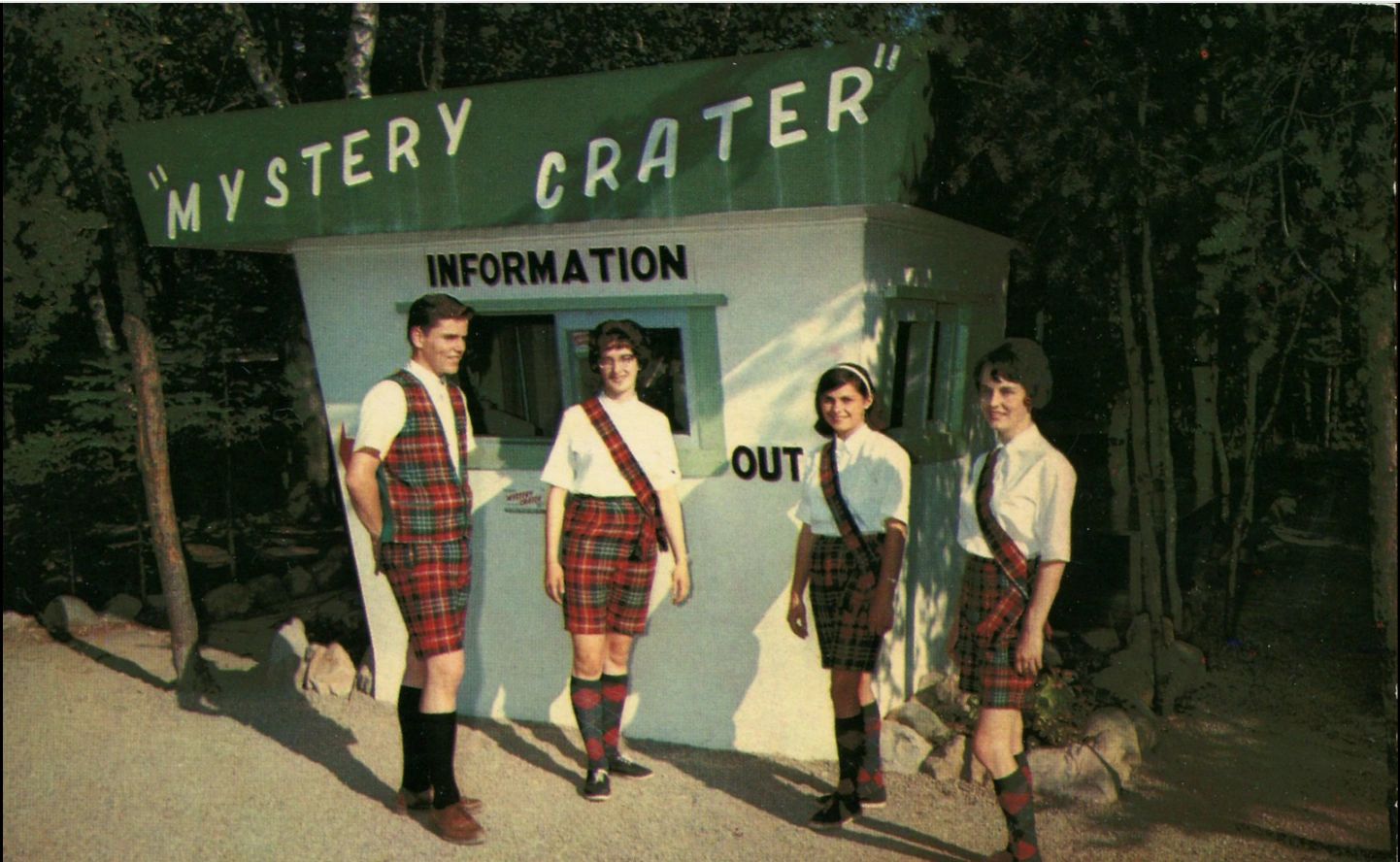
New Brunswick was once home to a quirky popular tourist attraction called the Mystery Crater, which advertised itself with the bold claim: “You are now in the Land of Mystery. See one of nature’s most Mysterious Phenomenon.”
It was “a crater of unknown origin and on the rim of it, optical illusions and strange physical sensations were experienced,” wrote the Saint John Times Globe newspaper.
The so-called mystery crater was discovered in the most unlikely way — during an impromptu roadside bathroom break.
Ontarians Perry and Emma Hamilton, with their children Dick and Carla, were on a roadtrip through New Brunswick when Perry pulled over after nature called him to the woods. When he returned, he said he’d found something and led the family to three curious cone-shaped holes in the ground.
“Emma asked Perry what it was she was looking at,” wrote David Spragg in a 2017 article in the Telegraph-Journal. “Perry said, “I don’t know but I want to buy this land.””
The Hamiltons did just that, putting up a sign that read simply: “MYSTERY CRATER.” They turned it into a roadside attraction with a drive-in snack bar, gift shop, guided tours, and a “crazy house.”
Perhaps surprisingly, based on the rather unconventional story of its discovery, the mystery crater soon became quite popular.
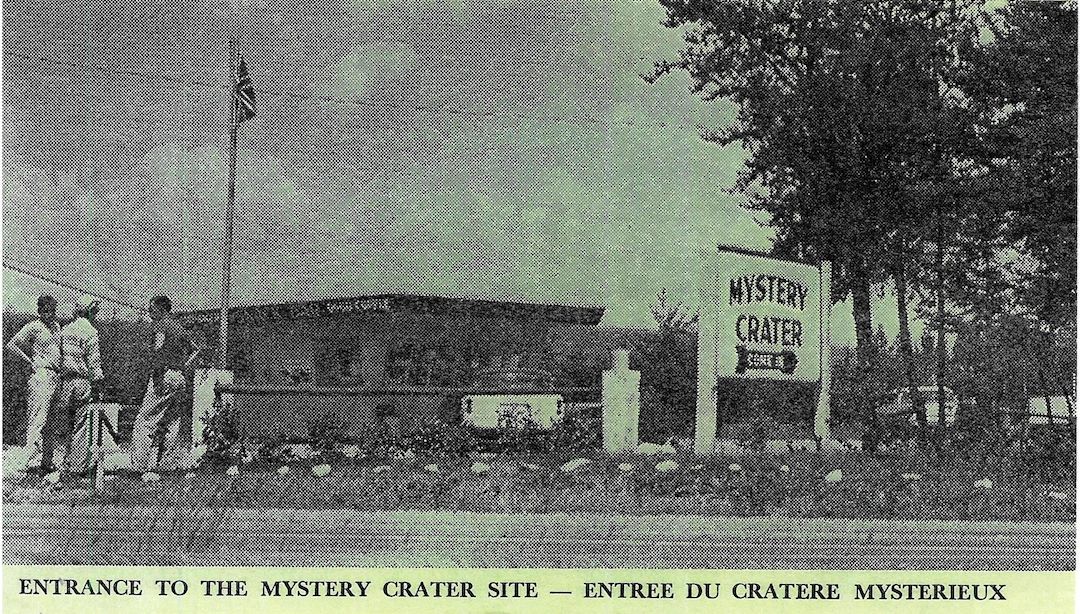
By 1964, the Southeastern New Brunswick Tourism Bureau declared that the Mystery Crater was the fourth most inquired-about destination in the province. Ahead of it was Magnetic Hill, Hopewell Rocks, and the number one most asked tourism question in the region: “What is the ferry schedule to get to PEI?”
Marty Klinkenberg’s family piled into an old station wagon one summer on a quest to visit New Brunswick’s roadside attractions. It was “sort of like one of Chevy Chase’s National Lampoon movies, only with fewer laughs,” he recalled in a 2002 Telegraph-Journal column.
They visited the Mystery Crater on a whim, lured by a sign which read “Dare to explore the mystery.” Klinkenberg quipped that “Stephen King has written novels that begin with similar circumstances.”
The tour, he wrote, was “mercifully short,” led by “an earnest young woman” who explained that "the origin of the crater was unknown, but might have been caused by a meteor crashing to earth.”
Klinkenberg recalled that he thought, “Well, it may have been a meteor, but more likely was created by a backhoe.”
The actual explanation for the mysterious craters was more down-to-earth. According to geologist Antonius Pronk, “the indentations are apparently karst holes, or solutions that appear in limestone.”
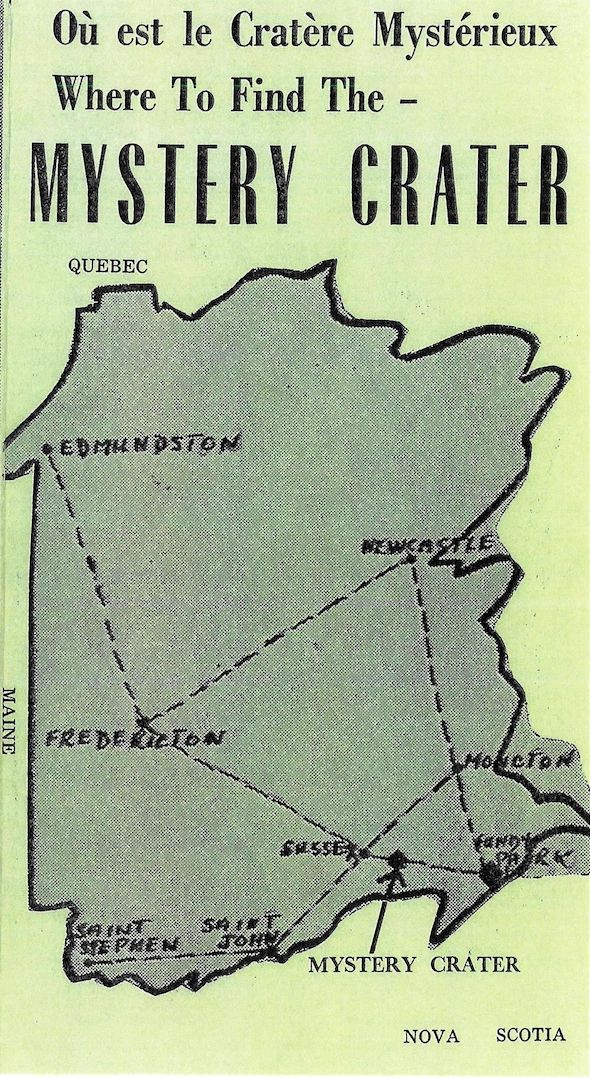
“That area is known for these kinds of features,” he told Spragg. “Just the fact that some of them look like they’re perfectly round is just more or less a coincidence. There’s a whole bunch of them in that area. They’re not impact craters. They’re a natural dissolution kind of feature in the bedrock.”
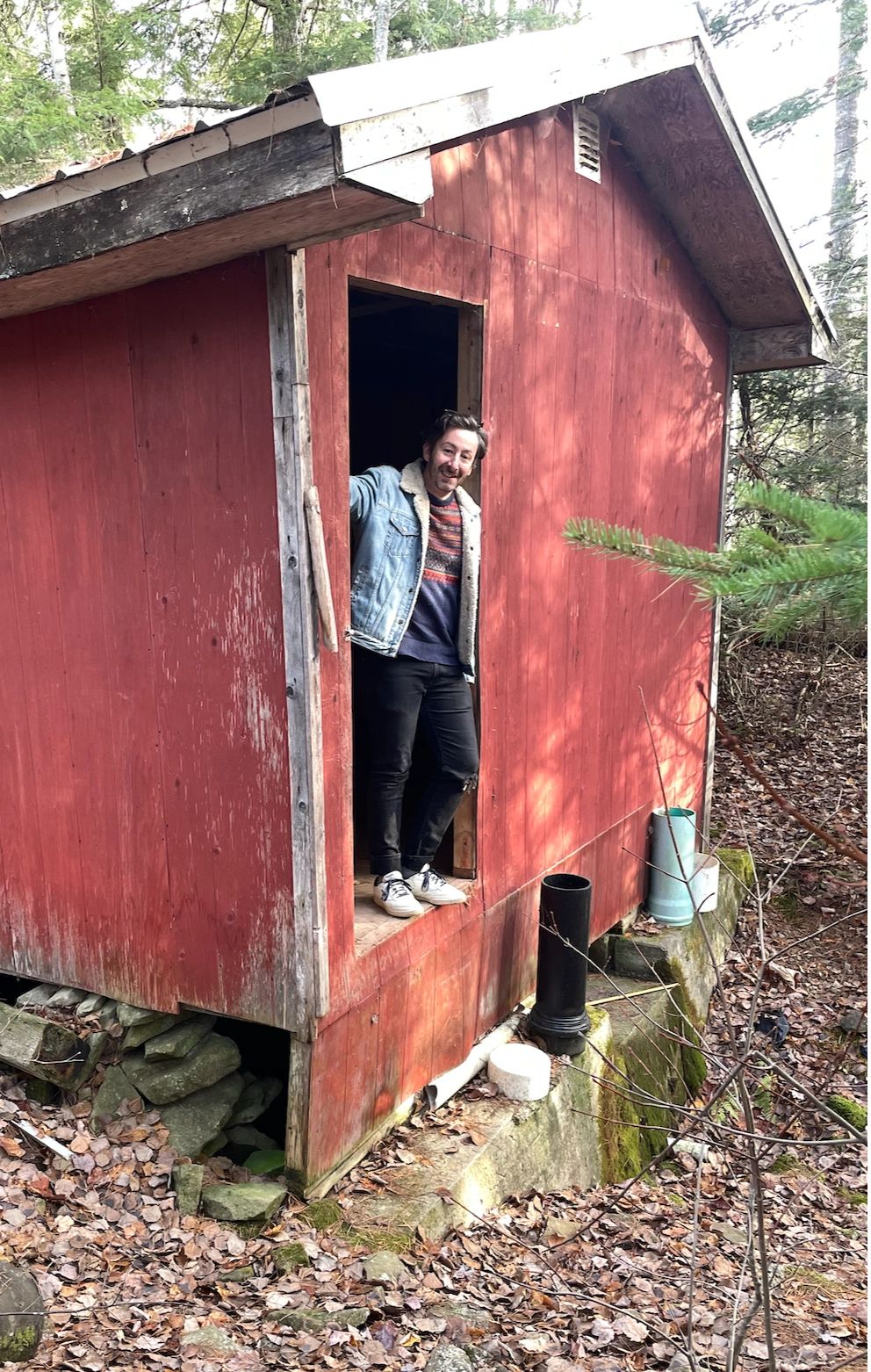
The main attraction, though, wasn’t the holes in the ground; it was the mysterious and mind-bending “crazy house.” At first glance, it looked like an ordinary shack — but once inside, visitors found their senses thrown completely out of whack.
Floors seemed to be slanted at impossible angles, yet people standing upright looked as though they were leaning. Water trickled uphill, defying gravity. Chairs would inexplicably tip over, not toward the ground, but against the walls, as if pulled by some unseen force. Every step inside the house was designed to make guests question the laws of physics and their own sense of balance in a full-body experience.
In reality, the “crazy house” was actually a clever optical illusion. It sat off the true horizontal, meaning it was built on a slant but looked normal. Basically, that tricks your eyes and confuses your brain, making things seem like they’re rolling uphill or standing at weird angles when they’re not. Your body feels one thing, but your eyes see something else. (Not completely unlike Magnetic Hill.)
In what’s surely the most 1970s thing imaginable, a 1971 article in the Moncton Transcript’s “For-Teens-By-Teens” column suggested high school grads spend their summer hitchhiking across Canada collecting bumper stickers.
The coolest bumper sticker, according to the teens, was The Mystery Crater sticker.

The least cool bumper sticker, they commented, was “See Saint John.” (The joke among Moncton teens was that it meant that the driver of the car with the “See Saint John” bumper sticker had once been a patient institutionalized in the city’s asylum. Teenagers: they’ve always been vicious.)
But the biggest reason to visit the Mystery Crater was, perhaps, for the food.
Found there was what the flyer called a “MODERN DRIVE-IN SNACK BAR” — always in all capital letters — “with Home Baking, picnic tables, refreshing spring water and facilities.”
At the time, New Brunswick was a bit behind the curve when it came to takeout food. The idea of a restaurant you didn’t have to sit down in was seen as relatively futuristic. Most importantly, though, the food was really good. People came from far and wide for the simple but well-done menu: hamburgers, French fries, “home cooking and good coffee.”
It became the sort of iconic takeaway destination people didn’t mind driving to because the food was so good — perhaps not unlike Ossie’s Lunch in Bethel today.
Then, tragedy struck.
On Victoria Day weekend in 1976, Perry Hamilton and his 28-year-old son Dick were driving near Woodstock when the car hit a Department of Transportation grader. Dick was killed in the accident.
That marked the end of the Mystery Crater’s heyday, though it quietly limped on for another decade.
Eventually, the Mystery Crater was bought up by Cooke Aquaculture. The seafood farming giant was not getting into the roadside attraction business, but built a hatchery on the land.
The Mystery Crater buildings were left as is, but over the years, several were destroyed by fires. According to the RCMP, they were deliberately set.
Today, little remains of the Mystery Crater beyond fading memories of a time when strange signs and mysterious holes in the ground were enough to send families off on an adventure.
- Looking for more quirky New Brunswick roadside attractions? Check out this article!
- Looking for more mysteries?! I've got a whole book of them! Buy it here!