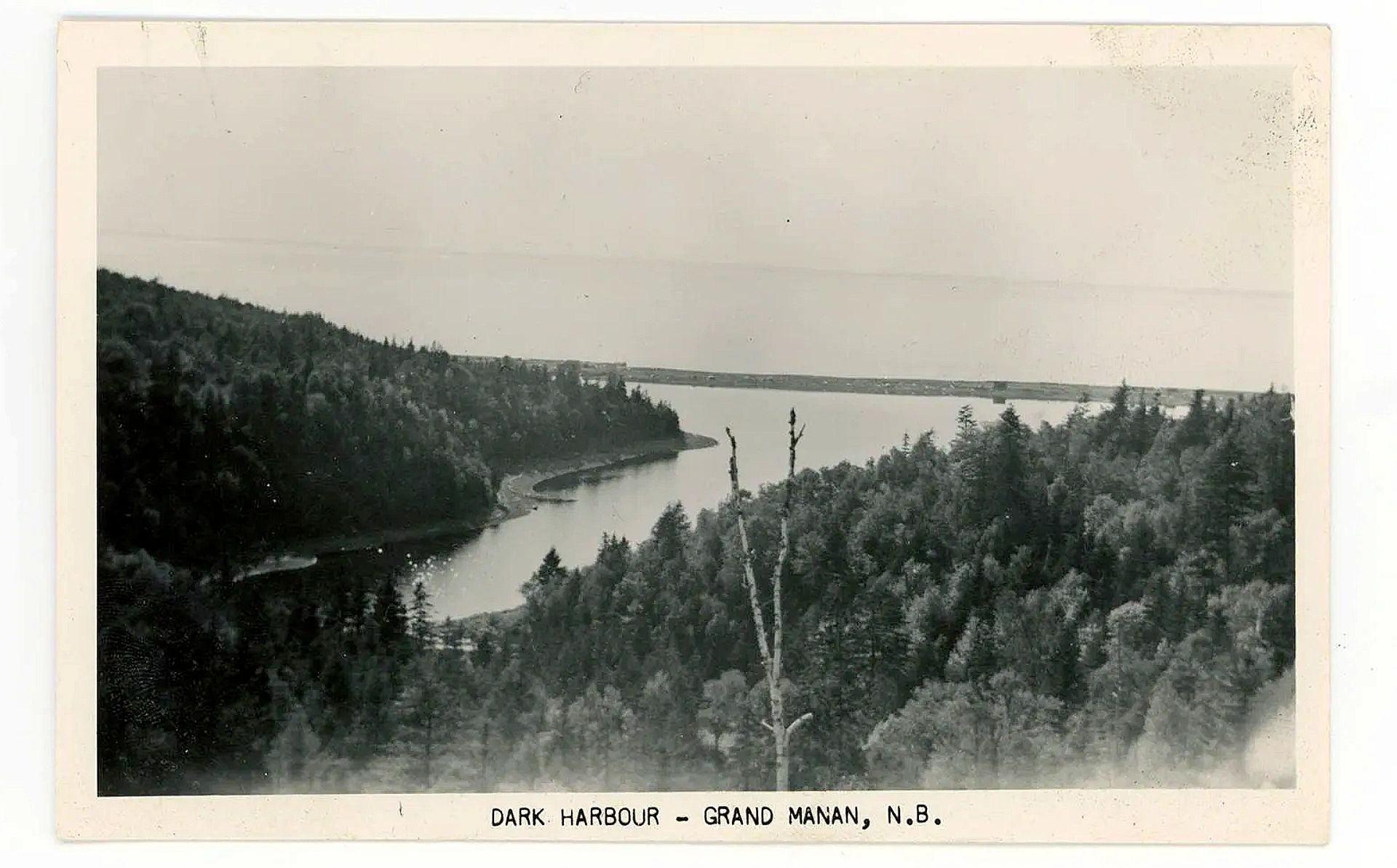
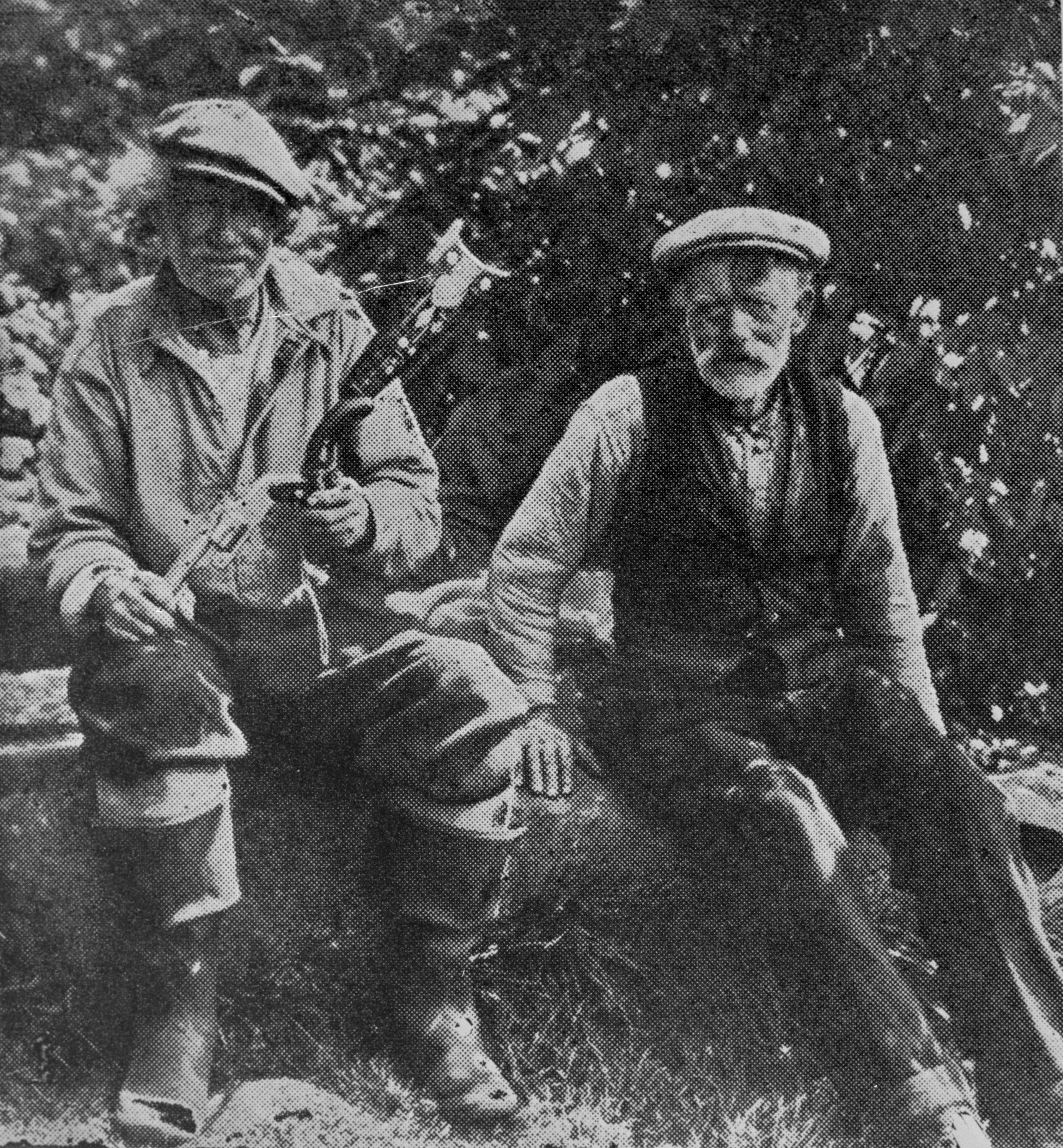
In the 1920s, two very eccentric brothers living on the island of Grand Manan became internationally famous as the mysterious and enigmatic “Dark Harbour Hermits.”
Hundreds of tourists from the United States and even faraway Europe came to visit them in their homemade shacks on the beaches of the strange and isolated place known as Dark Harbour, where the hermits would entertain the tourists with their art, their poems, and their songs.
This story is included in the book Backyard History: Forgotten Stories From Atlantic Canada's Past
“When the fog rolls in on the chilly breeze,
And the sun goes down in the West,
The moan of the wind through the shivering trees,
Plants a thrill of Fear in one’s breast;
But the flaming blush of the rising sun
O’er the treetops of God’s ‘arbour,
Restores the perfection of the thing undone,
By the shadows of Dark Harbour!”
In 1949, more than a decade after they passed away, the Telegraph Journal wistfully recalled The Dark Harbour Hermits, describing them as “probably the most cheerful recluses in history. Those who knew William and Louis best claimed they weren’t hermits at all, at heart, but incurable practical jokers who for years chuckled to themselves over the impressions they made with their strange clothes and stranger antics. They enjoyed putting on a show, and it was a good show.”
While their real names were indeed William and Louis, everyone knew them as Darby and Lucy.
In 1937, reporter Chester Allan Dickson visited the “Dark Harbour Hermits” to write a profile on the enigmatic duo.
He wrote:
"Lucy and Darby are known in New York, London, Paris and Rome as “The Dark Harbour Hermits,” yet comparatively few people in Canada have heard of the Grand Manan anchorets. The hermits themselves have lived within speaking distance for 35 years, and, as Darby puts it “we have never enjoyed a single spat!” ”
The reporter arrived at the place the hermits called home, which they named ‘The Bat’:
“Situated at the base of a towering cliff on the West of Grand Manan is 'The Bat,' the novel abode of ‘Darby’ Green. A few yards away is the dwelling of his brother ‘Lucy’."
“The Bat is a story and a half structure built of material collected from the bleak shores of the West coast of Grand Manan Island.”
“Starting with the erection of a mere hut over three decades ago, the hermit has built onto the main structure several editions of unique architectural design, which represented many years of toil on the part of the near-sighted builder Darby Green.”
“Over the doorway, on the outside of the dwelling, is fastened the original nameboard of a ship that was wrecked at Dark Harbour a third of a century ago, called “The Bat.” The doorstep of the abode consists of several ancient hatches, which were salvaged from wrecks many years ago.”
“The walls [of The Bat] are decorated with … a collection of every conceivable kind of bizarre photographs, which evidently appealed to the peculiar artistic tastes of “Darby The Hermit.” ”
“The rooms inside The Bat include a room which is inaccessible, for it has no windows or doors. One can enter only through the trap door of an upstairs chamber. Darby takes great pleasure in piloting this stranger up the insecure ladder to “the upper room,” where the eerie silence becomes oppressive as the trap door is silently removed."
"One is invited to peer into the apparent mysterious abode of spirit,s for nothing of a material nature is discernible in the mysterious depths. A soft chuckle behind my back causes me to turn quickly from the cavernous recess, just in time to catch the furtive expression on Darby’s countenance, which seems anything but reassuring.
The Hermit bursts into shrill laughter, and the spell is broken!
Darby hastily replaces the trap door and advises me to hurriedly retreat.”
Grand Manan is a large and somewhat isolated island in the Bay of Fundy. Before the arrival of Europeans, the Peskamoukati and Wolastoqiyik people called it Man-an-ook, which means simply, The Island. It was considered a safe place,e and they brought their elderly people there in winter. It was also a sacred burial place.
French explorer Samuel de Champlain was probably the first European explorer to set foot on the island.
It seems that he tried to simply give it the same name the Peskamoukati called it, Man-an-ook, but somehow garbled it into Manthane. He also added the Grand to it, Grand being, of course, French for big, and the island being… big.
The name of the island evolved and was changed three separate times during Champlain’s life, by Champlain himself, because of his spelling mistakes. It went from Manthane to Menasne to Menane. And we eventually settled on Manan. But it’s big, so Grand Manan.
After his rather questionable tour around the Dark Harbour Hermits’ homemade house on Grand Manan, our intrepid reporter Chester Allen Dickson sets about trying to pin down just who these mysterious and evasive hermits really are, as people.
He wrote: “There is a sort of Treasure Island atmosphere about the building and its surroundings and the hermits, themselves, could easily be mistaken for members of Long John Silver’s crew.”

“Louis — who went by ‘Lucy’ — as “the younger of the two, tall and straight, with a mass of long white natural curls falling over his shoulders, with piercing black eyes ever searching one’s very soul for signs of duplicity.”
The other brother, Darby, was quieter and “the steadying influence.” he could “literally recite poetry by the yard … and his memory is never at fault when a reading match is on the docket.”
Lucy was described as the entertainer of the two. He was also noted for his ability to make fine artistic carvings.
His preferred canvas was the wooden stock of guns, and he would carve intricate and detailed woodwork onto them “with decorative metals set into highly polished wood with mechanical precision … without the aid of the lathe or other modern tools.”
He claimed to the reporter that he did all of his carvings with a rusty knife he found buried on Grand Manan, stuck in a human skull.
He claimed that he was guided to the location of the knife in a skull when a Bible fell open in front of him, and he followed the clues on the page. After telling the reporter that he added what seems to be his trademark line, “and that story is the unvarnished truth!”
The reporter jotted down a story Darby recounted about meeting a pack of ghosts on the pathway to Dark Harbour on one moonlit night:
“It was a moonlit night, and I was sauntering down the pathway in the uninhabited district. Suddenly, four bearded men, dressed in ancient homespun suits, blocked the road."
"Each man carried a clothes bag on their back. These were fitted with rope drawing cords. They threw all of their burdens to the ground, and their leader produced a chart before my astonished gaze. One of the four placed his finger on the chart and croaked: This is the place! I was standing within eight feet of the leader. Curiosity impelled me to step nearer. As I did so, the forms literally vanished from sight, much to my surprise and disappointment. ”
“…and that story is the unvarnished truth! Neither me nor my brother has ever told an untruthful story!”
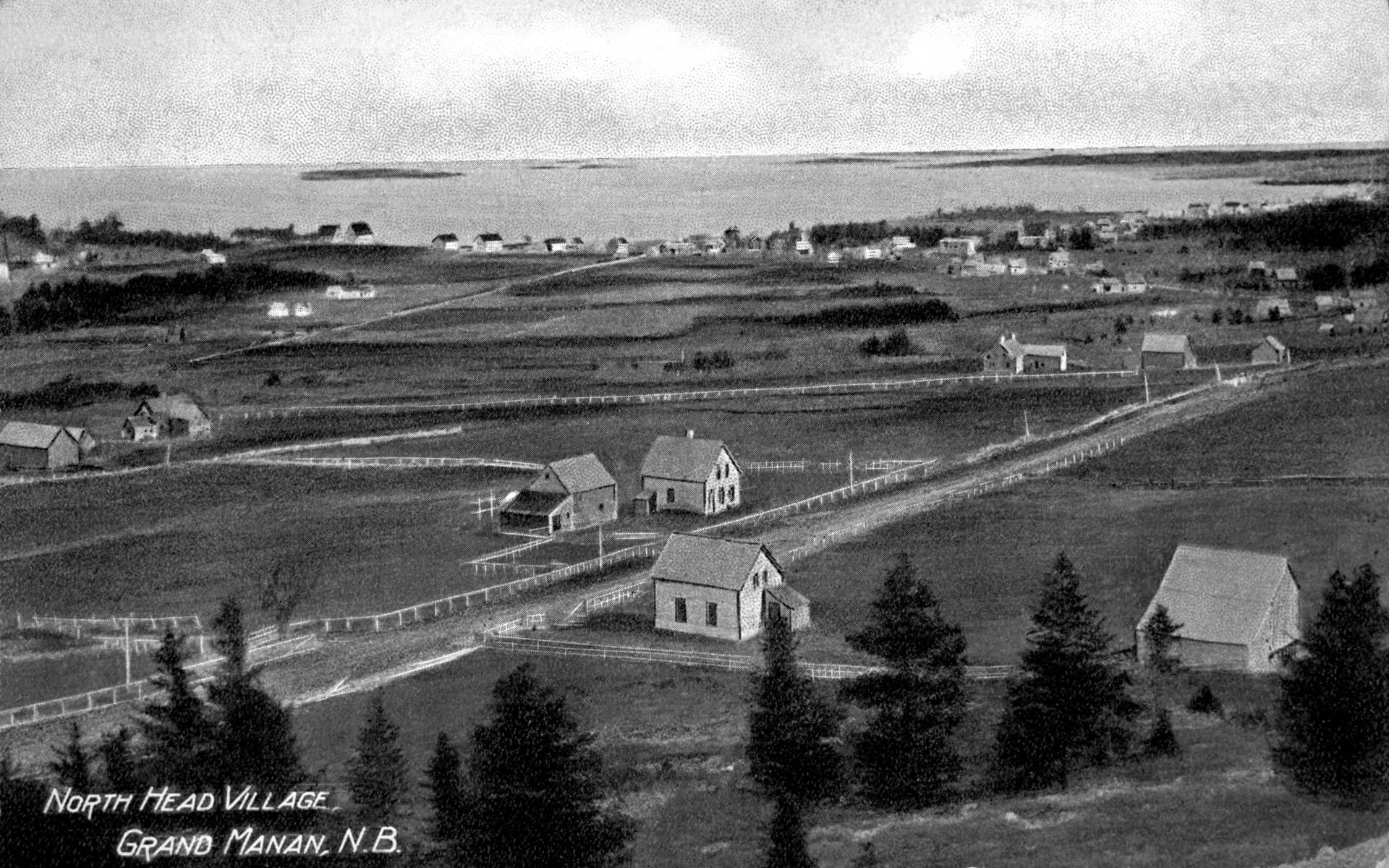
They grew up on the other side of Grand Manan Island, in the village of Castalia. In 1898, just a couple of years before the brothers departed their home village to the other side of the island to live as hermits, Castalia was a fishing and farming community with 1 post office, 3 stores, 2 sawmills and box mills, 3 churches and a population of 300 people.
Chester Allen Dickson asked Darby what caused them to leave their village of Castalia to live alone in Dark Harbour. He wrote that the mood became sombre when he asked the question:
“Darby seemingly stared wistfully at a mental picture of a winsome lady from bygone days. The silence remained unbroken for several minutes. Then, in softened tones, the hermit whispered:”
“I never married because I never thought I would be able to support a woman, on account of my failing eyesight, and that is why I am the way I am!”
“He flicked the ash off the end of an enormous homemade cigar and continued:”
“Lucy and me gets along good together and we never had a quarrel in thirty-five odd years, cause we live in our own houses thirty yards apart and Lucy plays fair!”
The reporter inquires what they do when they get sick, jotting down their reply:
“The hermits replied that they have never seen a doctor in their entire lives. Darby reasoned: “Might as well die game as let a doctor come and get all you got.” They gather herbs with which they make their own medicines.”
Though by the time Chester Allen Dickson visited to write his profile on the hermits, their main income had by far been surpassed by entertaining American tourists, nonetheless, he wrote that “Dulse gathering has long been the lifetime occupation of the Dark Harbour Hermits.”
Dulse was — and remains even today — what Dark Harbour is known for.

Dulse is seaweed. It’s this deep, dark purple, little chip-size bits of dried seaweed.
Records of people eating dulse date back some 1400 years in Scotland and Ireland. Ancient Celtic warriors ate it while marching, while in the seventeenth century, the British Navy fed it to sailors to prevent scurvy.
In Ireland, dulse was baked into bread, while in Scotland it was made into a relish. In the Mediterranean, it was added into stews, and in the Maritimes and New England, dulse flakes were traditionally added to seafood chowder and seafood pies.
Dulse is now quite international and got a notable boost in popularity after the 2011 Fukushima Nuclear Disaster in Japan, because its high content of iodine is thought to mitigate the effects of nuclear radiation.
And Grand Manan dulse –specifically the dulse from Dark Harbour– is considered the best dulse in the world.
The Dark Harbour Hermit brothers harvested dulse for a living.
In 1934, the Eastport Sentinel newspaper described dulse harvesting methods: “It is gathered and spread upon the absolutely clean rocks of the sea wall. It is spread by a peculiar twist of the fingers so that the leaves do not lay flat on the rocks underneath … an art not easily acquired. The dried dulse is spread [like] a large carpet and rolled the length of its side, say 20 feet or more.”
Back in the 1920s in particular, New Brunswick had fashioned itself as something of a tourist hotspot for wealthy tourists from the United States who would visit in the Summers, and the Dark Harbour Hermits, selling their dulse, were something these Americans would come from far and wide to see.
Chester Allen Dickson remarked on these visitors while writing his profile of the hermits:

“The Dark Harbour anchorets are an interesting attraction for summer tourists, and just inside of the doorway of Lucy’s abode long strips of cardboard are fastened to the wall, serving the purpose of a register. These bear the signatures of hundreds of visitors, including those of some of the world’s notables. Darby and Lucy are well known to many members of The Four Hundred, New York’s exclusive set, and to similar coteries of other United States cities.”
Before he departed, the reporter asked the Dark Harbour Hermits to recite him a poem.
Lucy stood up and, with “arms folded in a Napoleonic style” and recited in “sepulchral tones which dovetail nicely into the prophetic incantations”:
“There’s many a coat that is tattered and torn,
That beneath lies a true honest heart.
But because he’s not dressed like his neighbours in style,
Society keeps them apart.
For on one fortune smiles, while the other one fails,
Yes, no matter what venture he tries.
Time calls them both to the grave in the end,
And six feet of earth makes us all one size.”
This story is included in the book Backyard History: Forgotten Stories From Atlantic Canada's Past
- Previous Article: Nova Hollandia, Canada's Dutch Colony


