The Russian Revolution was one of the most significant events of the 20th Century. But one of its key leaders missed the beginning because he was imprisoned in Nova Scotia.
Leon Trotsky spent his entire life working towards a Russian revolution. It got him kicked out of his home nation, which is why he was living in New York City when the first rumblings of an uprising in Russia in 1917 were heard.
He immediately packed up his belongings and his family and boarded a ship back to Russia to join the revolution.
However, his ship, which was called the Chrislianiafjord, had to make a stop in Halifax before crossing the Atlantic Ocean. He later described the events in his autobiography, which is titled My Life:
“On April 3, British officers, accompanied by bluejackets, came aboard the Chrislianiafjord and demanded, in the name of the local admiral, that I, my family, and five other passengers leave the boat. We declared that the order was illegal and refused to obey, whereupon armed bluejackets pounced on us … my boy ran up to help me and struck an officer with his little fist. “Shall I hit him again, Papa?” he shouted. He was eleven then, and it was his first lesson in British democracy.”
Despite what Trotsky claimed, he hadn’t actually been arrested, but rather interned. He had indeed been travelling legally, and was never charged.
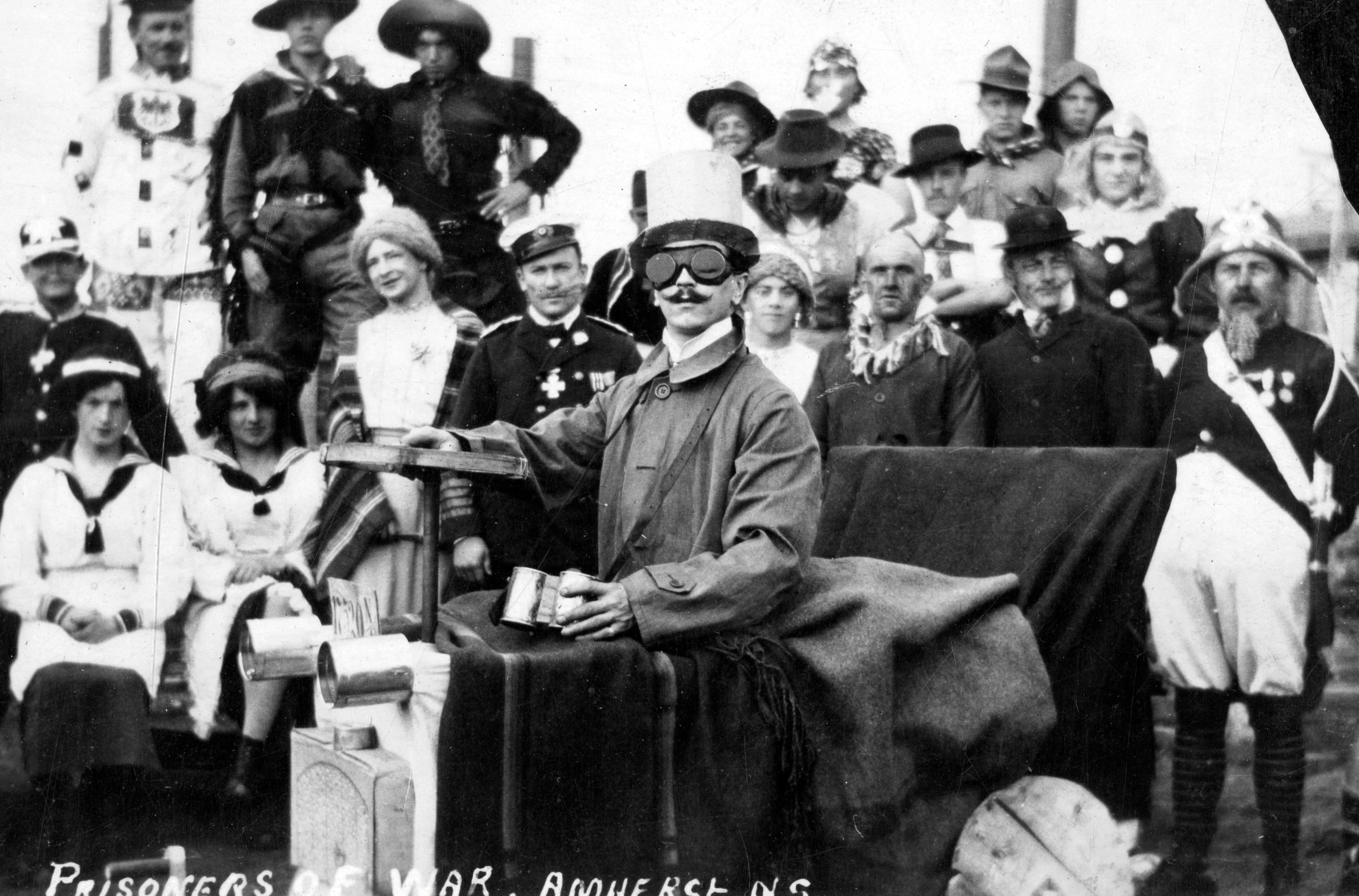
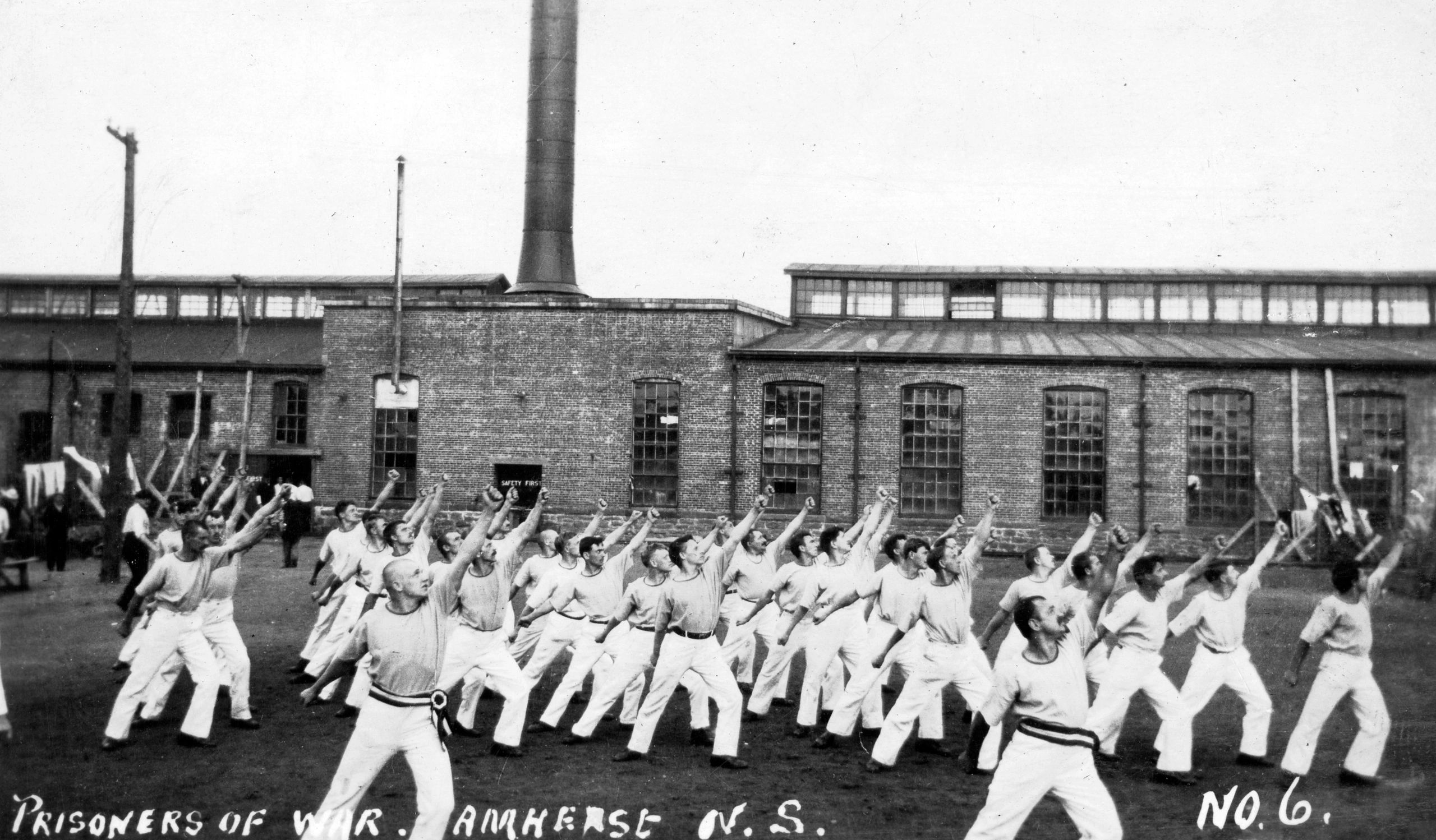
Trotsky was sent by train to the Amherst Internment Camp (which he called a concentration camp). He later wrote that “The Amherst concentration camp was located in an old and very dilapidated iron-foundry that had been confiscated from its German owner. The sleeping bunks were arranged in three tiers, two deep, on each side of the hall. About eight hundred of us lived in these conditions. The air in this impoverished dormitory at night can be imagined.”
The was one of 24 internment camps in Canada in the First World War. All three Maritimes camps were in Nova Scotia. Trotsky wrote that “of these eight hundred prisoners … perhaps five hundred were sailors from German boats sunk by the British; about two hundred were workers caught by the war in Canada, and a hundred more were officers and civilians of the bourgeois class.”
He wrote that once he arrived he was processed in “an examination the likes of which I had never before experienced, even in the Peter-Paul fortress [in Russia]. Even in the Czar’s fortress the police stripped me and searched me in privacy, whereas here our democratic allies subjected us to this shameful humiliation before a dozen men.”
When he met Amherst camp’s commandment, Col. Arthur Edward Morris, an ageing veteran of the Boer War, Trotsky protested that “no orders for my arrest had ever been produced.”
The Colonel retorted that the Russian government had exiled him. Trotsky argued that that government had been overthrown by the revolution, but found that: “for him it was like the Russian revolution simply did not exist. I tried to explain that the Czar’s ministers who [exiled me] were now in prison … But this was too complicated for the Colonel who had made his career in the British colonies and the Boer War. I did not show proper respect when I spoke to him which made him growl “If I only had you on the South African coast!” ”
Trotsky claimed he spent his time in Amherst educating, inspiring, and organising the German prisoners toward a communist revolution:
“The whole month I was there was like one continuous mass meeting. I told the prisoners about the Russian revolution, about Lenin … Besides these speeches we also had group discussions.”
According to Captain F. C. Whitmore, the second in command of the Amherst Internment Camp: Trotsky “gave us a lot of trouble at the camp, and if he had stayed much longer … would have made communists of all the German prisoners!”
Only four weeks later, Trotsky wrote he was “ordered to pack our things … the commander told us, in his characteristic Anglo-Colonial way, that we were to sail on a Danish boat for Russia. Colonel Morris’ face twitched convulsively. He could not bear the thought that we were escaping him. If only it had been on the South African coast!”
“As we were being taken away from the camp, our fellow prisoners gave us a most impressive send-off. … the sailors and workers lined the passage on both sides, an improvised band played the revolutionary march, and friendly hands were extended to us from every quarter. … Even now it makes me happy to remember that in the very midst of the war, we were fraternising with German sailors in Amherst.”
Years later, Trotsky wrote that “I must admit that even to-day the secret machinery of [my] arrest … is not clear to me.”
A trove of secret documents released by British spy agencies in 2001 sheds light Trotsky’s curious revolutionary roadblock in Nova Scotia.
British spies had been tracking Trotsky’s activities in New York City. A MI5 telegram dated March 22, 1917, warned: “An important movement has been started … with a view to getting back Revolutionary Socialists into Russia … with [the] object of establishing a Republic and initiating Peace movement. The “main leader” … is Trotsky.”
An informant told the spies that Trotsky was being paid by the German government, which is why he was detained in Halifax.
However, when high ranking MI6 spymaster Claude Dansy reviewed the Trotsky situation and investigated the source he wrote: “from what I gathered, there is a strong possibility that he was an agent provocateur, used by the old Russian Secret Police. I [ordered Trotsky] had better be discharged at once … unless they were very certain of the source of information against him it would be much better to let him go before he got angry.”
Leon Trotsky returned home where he almost single-handedly created the Red Army that won the Russian Civil War and established the Soviet Union.