New Brunswick’s rowing champions “The Paris Crew,” whom we met in last week’s article, were hardly one-hit wonders. One remarkable event in their legendary career was “The Fatal Race.”

After their surprise victory in the International Regatta at the Paris 1867 World Fair, The Paris Crew, consisting of Robert Fulton, Samuel Hutton, George Price and Elijah Ross, did not rest on their laurels. For three years they maintained a remarkable undefeated streak of victories in North America.
Meanwhile, in Europe, rowing races were being similarly dominated by Newcastle-Upon-Tyne.
In 1870 the two teams finally met. The hotly anticipated challenge ended with an unmitigated disaster for the New Brunswickers; mid-race their boat was swamped by a wave. It filled with water and sank. They didn’t even finish the race.
Despite their abject humiliation, when The Paris Crew arrived back home to Saint John they were still treated to a victory parade.
Undaunted by their poor showing, The Paris Crew challenged Newcastle to a rematch the following summer, this time on their home turf: New Brunswick.
Newcastle arrived in Saint John to find a city in the throes of a full-blown rowing hysteria. The city had painted the town pink for the occasion.
A reporter in town with the Montreal Daily Witness newspaper marvelled “The St. John people, old and young, rich and poor, were prolific in their display of pink ribbon—Paris crew colors.” The reporter noted that Saint Johners had gone out of their way to cover up any dark blue – Newcastle’s colours.
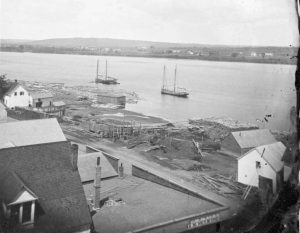
Newspapers estimated a staggering 55,000 people travelled from all over the world to the community of The Chalet on the Kennebacasis River to watch the big race – an absolutely stunning number considering the entire population of New Brunswick at the time barely topped a quarter million.
Among them was a reporter for the New York Times, who wrote that on the big day, August 23rd, 1871; “the sun rose bright and warm, and even at an early hour rendered everybody rather uncomfortable, so great was the press of the crowd.”
The reporter went on to pen a vivid description of the scene that day, which appeared on the front page of the New York Times:
“The shore was lined with impromptu booths, grandstands for spectators … flags innumerable waved in every direction, of all sizes, colors and descriptions … thousands of people thronged the shores in anticipation … countless steamers and other river craft plied to and fro … small boats and canoes darted about hither and tither. The cries of petty showmen and peddlers of refreshments, the loud murmurs of spectators as they gave vent to their suppressed excitements … all went to make up a scene not readily forgotten.”
Though the reporter went on to note that while everyone was in “good humor,” they attributed that to the “intoxicating liquor they have continued to imbibe since their daylight breakfast.”
When the two teams appeared, both were met with uproarious cheering. However, the way the two teams reacted to the crowd could not be more different.
The hometown heroes were terrified another windy day would see their boat swamped again. In an unusual move, they even went so far as to announce beforehand that they would withdraw if the weather were poor.
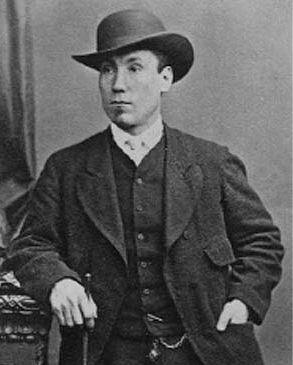
The weather was clear though, with the New York Times remarking that “seldom did any sheet of water seem so complaisant.” Nonetheless, the nervous New Brunswickers focussed on their final preparations.
Newcastle, on the other hand, confidently hammed it up for the spectators, juggling thier navy blue hats.
According to the New York Times, they “stripped off their white knit shirts, thus revealing their stalwart and embrowned frames.” The shirtless spectacle “electrified the spectators,” who grew even more excited when the team’s “strong and lusty” Captain James Renforth walked into the crowd to mingle.
The nervous New Brunswick team patiently waited 20 minutes after the race was supposed to begin for the shirtless Englishmen to join them at the starting point.

The two teams had to row three miles in a straight line, turn around, and then row back to the start/finish line.
Then they were off. The New Brunswick team, which had always been renowned for their strong starts, instantly pulled ahead.
However, the more experienced Newcastle team soon caught up and passed them.
After reaching the midpoint and turning around, The Paris Crew caught up to the Englishmen.
As the teams drew closer to the finish line, after about half an hour of rowing, the New Brunswickers again pulled ahead.
Newcastle’s Captain James Renforth ordered his team to push even harder.
Then tragedy struck.
“Suddenly,” the New York Times reporter wrote, “a wild cry erupted from the portion of the shore nearest the scene…”
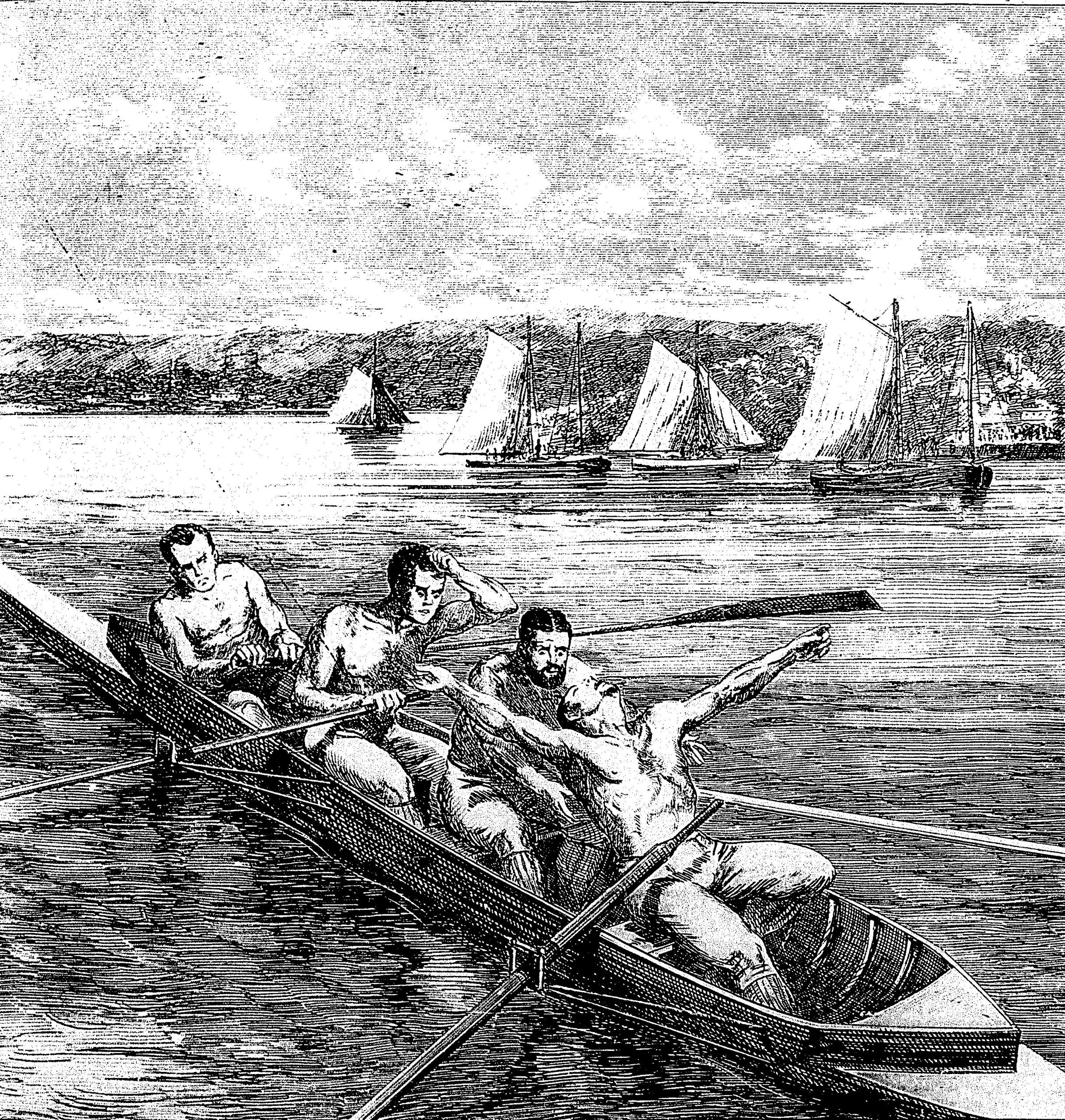
“…It became apparent that something ailed Renforth,” The St. John Progress newspaper added. “He swayed a bit from side to side and was apparently in great distress…”
Suddenly the English team’s boat turned away from the finish line and began making for the shore.
“He struggled,” the St. John Progress newspaper continued, “the oar dropped from his grasp … and he fell back…”
“…He fell heavily from his seat,” wrote the New York Times, adding simply: “Poor Renforth.”
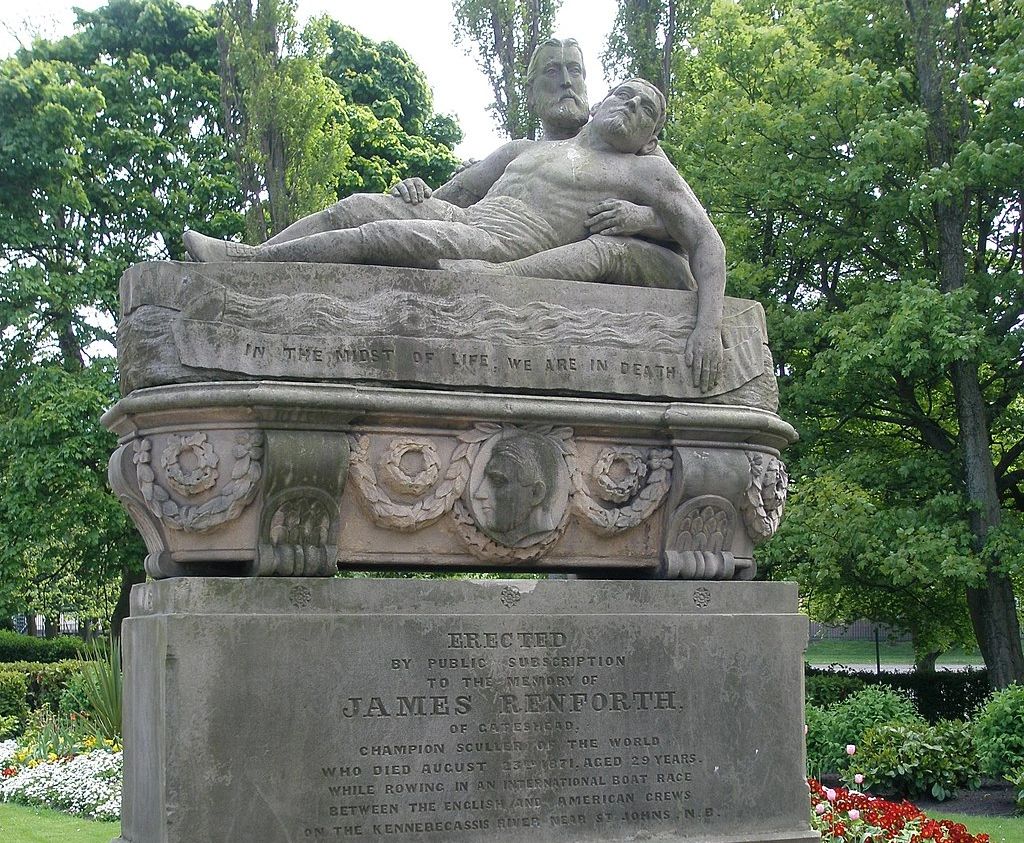
At the age of only 29 years old, Newcastle-upon-Tyne’s Captain James Renforth died from a massive heart attack.
The New York Times wrote the crowd was “oppressed by the tragical ending of the day’s proceedings and a universal feeling of gloom is manifested.”
The two teams were scheduled to race a rematch eight days later in the Halifax Regatta, but The Paris Crew chose to forfeit, ensuring the race’s $3000 prize was awarded to their rivals. They, in turn, gave the money to their fallen Captain’s family.
The Chalet was renamed Renforth in his honour. In 1998 Renforth was amalgamated into Rothsay, but today one can still find streets and parks in that town named in honour of James Renforth.