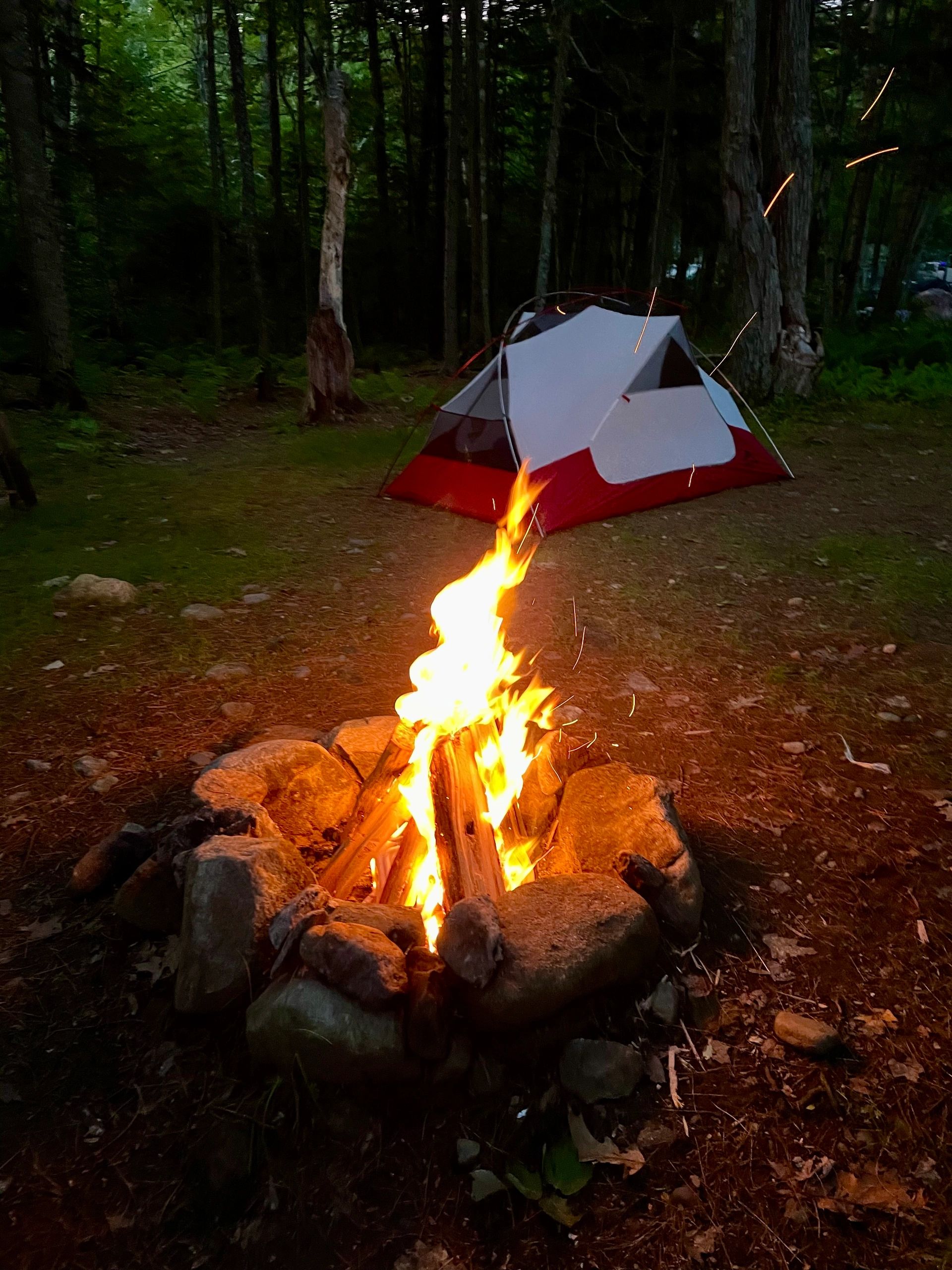
Around campfires in the Maritimes, we tell our most famous ghost story: the tale of the Dungarvon Whooper.
It is a dark and macabre ghost story recounting how a cook working in the woods as a lumberjack had his throat slit. His murderer stole his money, and the unfortunate chef haunts the forests of the Miramichi, making screaming noises that sound like whoops to this day…
This story, as it turns out is fictional, but those screaming sounds were real.
In 1896, two visiting reporters may have discovered the true story behind those haunting screams. And that tale is even stranger than the ghost story…
This story is included in the book Backyard History: Forgotten Stories From Atlantic Canada's Past
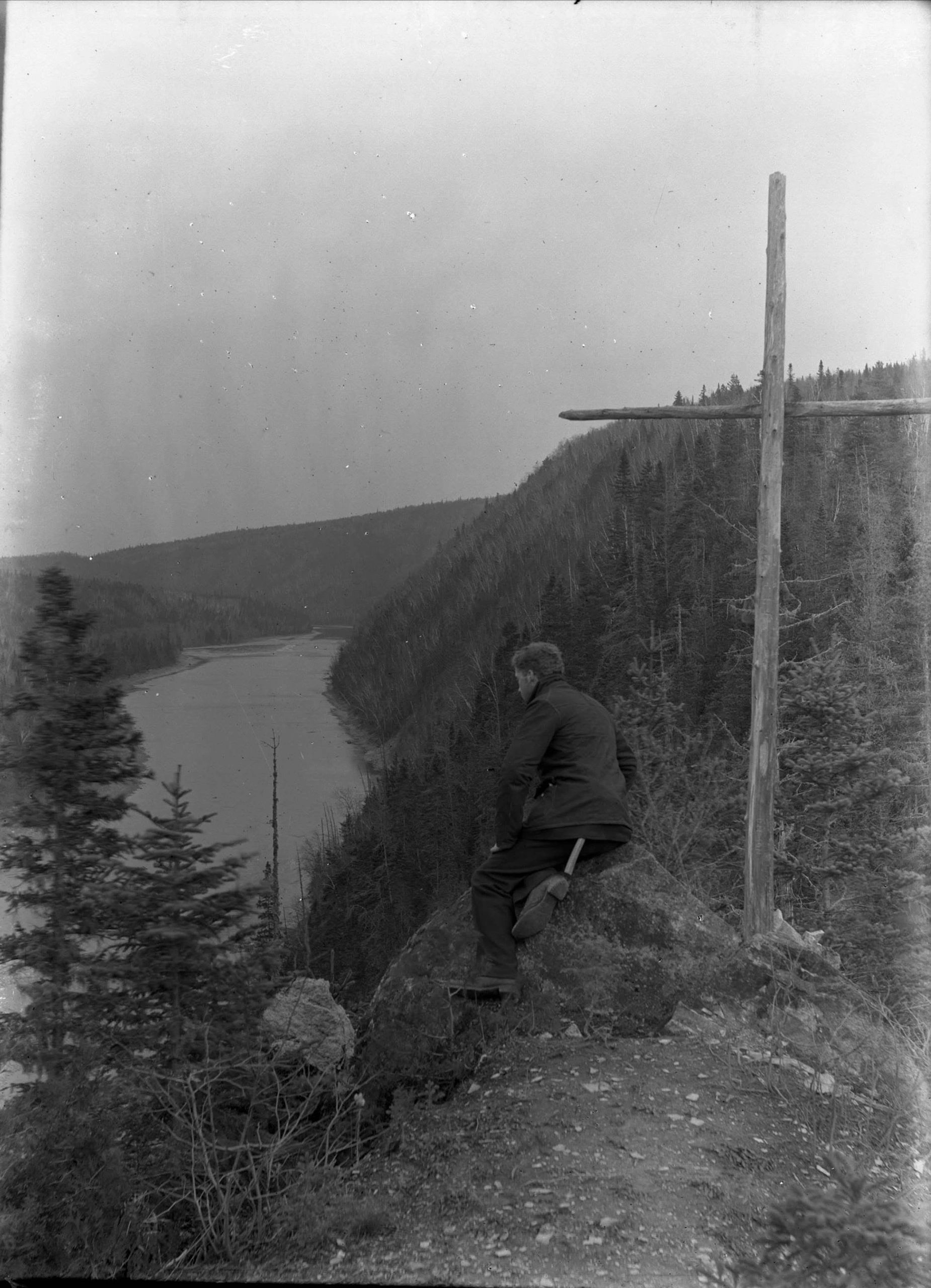
The mysterious events began abruptly in 1869. It all started in the great Miramichi forests around Clearwater Brook right after The Saxby Gale subsided.
That hurricane blasted the Maritimes with 100-mile-an-hour winds and two-meter-high storm surges, dealing significant damage to the region. To this day the Gale remains the 10th deadliest hurricane in Canadian history.
Shortly after the storm subsided, strange screams began to be heard in the forests. It was said that they sounded like “whooping”.
In the five years that followed, those whoops would come quite close to the logging camps in the area. The mere presence of the creature making the fearful sounds scared the horses. Even the tough lumberjacks who worked in the woods were frightened.
Because the noises sounded like "whoops," the creature making them was nicknamed "The Whooper."
Few people in the region could write back then, so we have an incomplete picture of what happened. However, one man wrote of his encounters with The Whooper.
George Scott once caught a glimpse of The Whooper in the forest.
He wrote that it stood upright on two legs and looked like a man. He claimed to have been chased by it in the woods near the caves at the head of Clearwater Brook.
While making his escape, he lost his coat.
The people in the area thought George Scott was chased because he was getting close to The Whooper’s lair.
There was a series of caves the size of comfortable rooms linked by passageways at the head of Clearwater Brook.
The locals simply avoided Clearwater Brook. This continued for five years.
The Spring flooding was particularly bad on Clearwater Brook in 1874. The caves were completely inundated. After the waters subsided, the haunting screams ended.
The locals mustered up the courage to explore the caves. They found that they were empty.
However, they showed signs of having once been lived in.
Inside, they found the bones of small animals, scattered ashes from fires
They also found the tattered remains of George Scott’s coat.
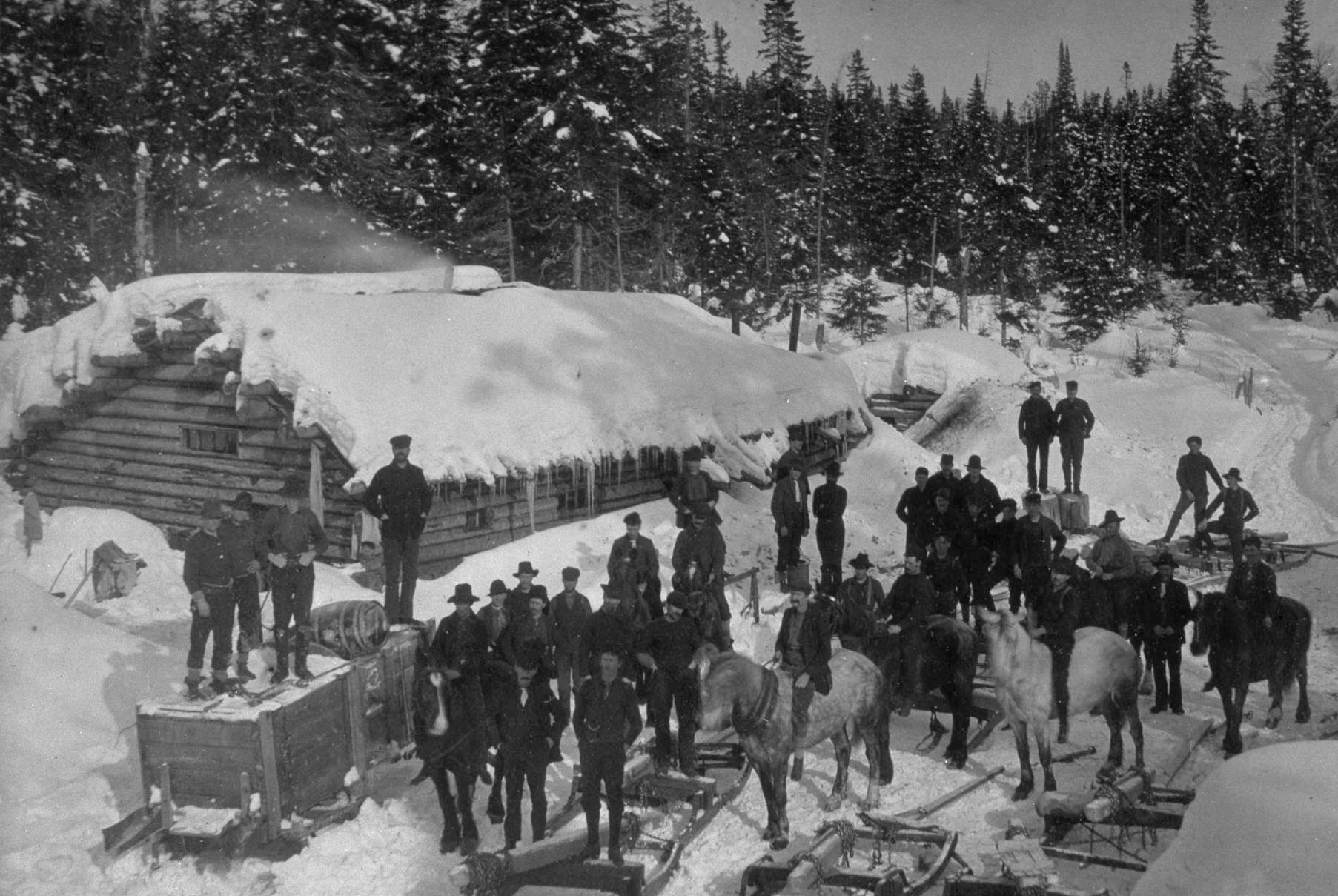
Fifteen years later, there was a new generation of loggers working in the woods. The new generation thought themselves more sophisticated than their fathers.
They dismissed the old stories of a mysterious creature making whooping sounds in the woods as old-fashioned silliness.
They felt that if there was ever a Whooper in the first place, it was probably just an Eastern Panther.
Then, The Whooper re-appeared.
In the Autumn of 1889, the blood-curdling screams began to be heard again. Though the old-timers claimed that screams were the same, the location was different: now they were around the Dungarvon, a stream in Southwest Miramichi.
Although the haunting screams were the same, the behaviour was much different and far more brazen.
The Whooper was now breaking into logging camps and cabins when people were away and making off with flour, salt cod, and pork — not the kinds of feats an Eastern Panther could manage.
Particularly frustrating for the loggers was that the Whooper was targeting their depot camps. There they spent summer stocking up on food and supplies for their winter logging seasons.
Fear of the mysterious Whooper and its ghostly howls spread and people living in the area became afraid to go outside at night.
Old Tom Hunter wasn’t scared though. He drove his cart and two horses along the Dungarvon after dark one late Autumn night heading home, when the blood-curdling screams pierced the still darkness.
His horses were spooked and fell into the river, dragging Old Tom with them. As he tried to quiet his spooked horses, he heard a peal of haunting maniacal laughter ringing out.
Old Tom Hunter concluded that God was punishing him for swearing.
It was said he never swore again.
One year later, Old Tom was making his way back home when night began to fall.
Not wanting to risk another encounter with the Whooper, he stopped to spend the night in an old abandoned logging camp. It was a cold night in early Autumn.
Knowing the camp was home to many skunks, he lit a candle at the head of his bed to ward them off.
Old Tom awoke in the night to find his candle gone.
Unable to find it, he lit another.
Later, he awoke again to find his candle missing.
Again, he lit another candle.
A third time, he awoke in the night.
A third time, his candle had gone missing.
This time, the door to his cabin was open, blowing in the night's breeze.
When Old Tom went to close the door, he noticed that on the thin layer of frost covering the ground were the unmistakable marks of fresh prints left by a barefooted human.
The news of the footprints spread quickly through the Dungarvon. A ghost was one thing, but a human being, walking around in the frosty autumn night in bare feet was a whole different level of frightening!
A siege mentality began to take over and every disturbance in the forest began to be attributed to The Whooper. People barricaded their doors at night and became fearful of every strange sound…

Frank Risteen was a reporter writing about politics in the New Brunswick Legislature. That was just his day job though — his real passion in life was his curious hobby of being an amateur tourism promoter for his home province.
Frank Risteen was feeling pleased with himself. In a major coup, he had convinced a high-profile American reporter who worked in Congress to come visit him in New Brunswick.
The two of them would be going on a fishing trip on the Miramichi and in turn, the hotshot American reporter, who was named Frederick Irland, would write a series of stories about his trip for his many readers in the United States.
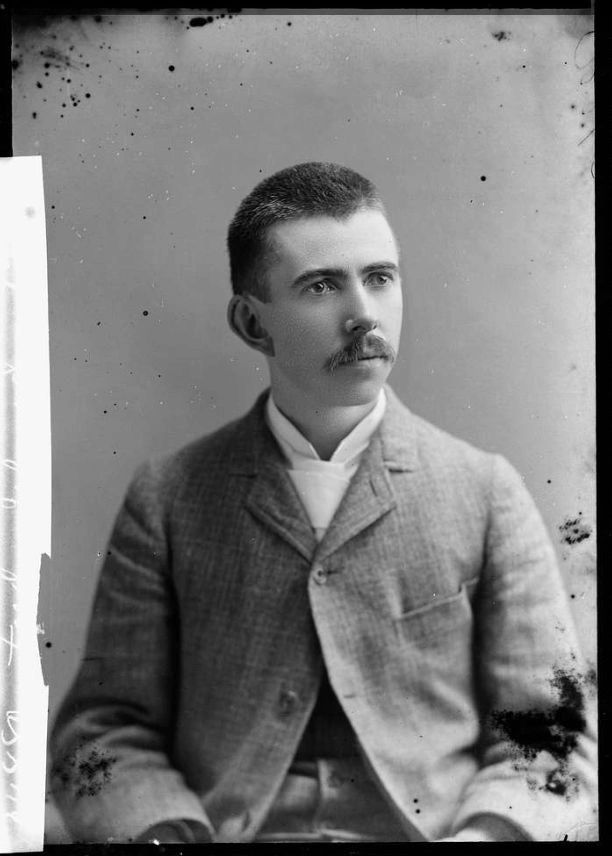
Irland worked in Washington DC which meant that some of the most powerful Americans in the country would read about New Brunswick. For an amateur tourism promotion hobbyist like Frank Risteen, convincing such an influential American to visit his humble little province was an incredibly exciting development.
The Fredericton reporter and his esteemed American guest headed up to the Miramichi with a celebrated guide Henry Brathwaite, and two guides. On their way there they would pass the Dungarvon.
The American reporter, Frederick Irland, wrote that they made their way through "the wide, little-known wilderness which forms the larger part of the province of New Brunswick. Under the pilotage of that greatest of all New Brunswick guides, Mr. Henry Braithwaite, of Stanley, three of us had started from Boiestown on our way to Little Sou’west Lake, a good sixty-mile walk. … It was a wilderness so little disturbed that we knew the pedigree of every footprint we saw.”
There were only two other sets of human footprints in the woods, as far as they knew. Those belonged to the two assistants who worked for their guide Henry Braithwaite, and they had gone ahead to mark the trail. One assistant guide was a local man named Dave Douglass, while the other was an unnamed Mi’kmaq guide from the Gaspe Peninsula region in Quebec.
Frederick Irland wrote that they were covering difficult terrain, including the much dreaded Dungarvon Portage where they had to carry their equipment over land to the next river:
“Some of you know what a thirty-mile portage is, over a very old and long unused lumber road, full of fallen trees, up steep hillsides, across quaking bogs, where the horses frequently break through, leg-deep.”
They arrived at a long-abandoned logging camp, where lumberjacks would have once spent the winter cutting trees.
“[T]here the [trail] ended entirely. At an old lumber camp, the last purpose of even that barbaric relative of civilization. Beyond … stretched the grim and unmapped wilderness.”
Waiting for them was Dave Douglass, one of the two advance guides. The unnamed Mi’kmaq guide was some twelve miles further ahead, building a birchbark canoe that the group would use to cross the next river.
Settling in at the abandoned logging camp, the group caught some trout for dinner, while their guide Henry Brathwaite managed to catch a seven-pound salmon, and he cooked them dinner as night began to fall.
Frederick Irland wrote:
“The day died slowly, as it always does … in July. It was nearly 9 o’clock before it got too dark to read.”
The tired American thought it was too dark to hunt that evening, but the New Brunswick reporter Frank Risteen disagreed and, to prove his point, Frederick Irland wrote that he “fired at a distant stub and hit it.”
They trudged out to hunt, but quickly had to abandon this plan as night began to fall.
Though it was the height of summer, it was an unusually cold night so they lit a fire in an old stove in their dilapidated cabin.
Frank Risteen was awoken in the night by a high-pitched scream in the cold darkness.
Shaken, he was unable to fall back to sleep.
As he lay awake, they saw a dark silhouette darken the open doorway of their cabin…
Risteen struggled to light a candle
In the flickering flame’s light, they saw an old man wearing tattered rags with long dishevelled matted hair standing in their doorway.
He was carrying an old rusty axe…
…although, from the way he behaved, he didn’t seem like an immediate threat.
Frank Risteen watched as the mysterious old man tiredly walked past them up to their dying fire and began warming his hands over the embers.
In Frederick Irland’s article about these events, which he published in an article he titled "The Lost Man" in Forest & Stream Magazine in 1895, he recounted that he had actually slept through all this late-night excitement.
This had been despite Frank Risteen's best efforts towake him up:
“Sometime in the night, I do not know when – it was after the moon rose – I was awakened by Risteen, who crept back into the bunk, saying that a lost man had come into camp, .. and that neither the men nor himself could make anything out of him. I was too sleepy to take much interest in the matter.”
When Frederick Irland finally bothered to wake up the next morning, the talked to the Dungarvon Whooper, who was still there, and in his article offers us the best physical description we have of him:
“The next morning … [I discovered in the camp] a grizzled, skinny old chap, who might have been 70, and was more likely 60. He had two weeks growth of beard. He was tall and bony, and strong considering his age. … He had refused to come into the camp [the night before,] but slept all night on the ground by the fire. … He had with him no matches, no compass, no blanket, [and] no food. … His sole earthly possession was a rusty axe which he had picked up in some stream that he crossed, and it was plain to see that it had lain in the water a long time.”
“That vast tract of mountain and forest is an extremely bad place for a man who has neither food nor fire …[yet] The fact of being far astray in an absolutely unpopulated wilderness did not arouse a word of alarm or regret. ”
“He spoke with an uncertainty of utterance which made him difficult to pronounce intelligibly.”
Despite the stranger being difficult to understand, Frederick Irland tried to interview his unexpected guest.
Unfortunately, he wrote this part of his article somewhat confusingly, as if he was responding to the same questions he asked. Here is what he wrote, exactly as it appeared:
“How had he stumbled upon us?”
“O, He heard the gun go off.”
“ “Where was he going?” ”
“To Grand Falls … and he thought he was almost there?!”
“But great goodness, man, Grand Falls is on the Saint John River, seventy miles in a straight line, and a hundred from here, the way you’ll have to go.”
“This information did not seem to disturb the man much, and in fact nothing else did.”
“What had he had to eat yesterday?”
“A quail?! Now, there is not a quail in that region.”
“How long had he been out?”
“He did not remember, but he had been in the American war. … If he could get to Grand Rapids he had friends there … ”
“It was difficult for him to pronounce his own name intelligibly [but] it sounded like Dorns or Torrance.”
“While breakfast was being cooked I took his photograph – a thing he did not like.”
“Well, I’ve been in these woods most of my life, and he beats me.”
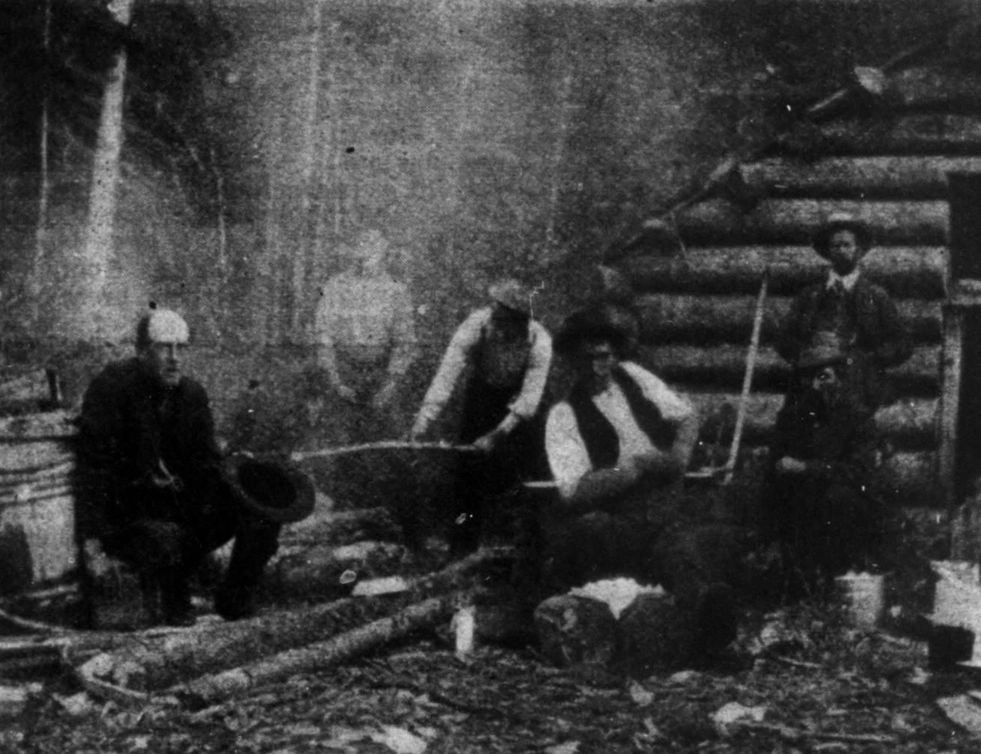
So assuming The Lost Man was the Dungarvon Whooper, which I believe he was, we’ve learned some interesting details about this person commonly thought to be a ghost.
Apparently, he was a veteran of the American Civil War. The Civil War ended in 1865 and the earliest reports of the Dungarvon Whooper appear in 1869, so that timeline roughly fits.
He seems to have had connections with Grand Rapids, Michigan. At the beginning of the Civil War, Grand Rapids was basically like a frontier town in a cowboy movie, complete with saloons and bordellos. By the time the war ended, the city had grown considerably and had become a bustling manufacturing city focussed on a large furniture-making industry. It’s possible this change could have deeply affected a traumatised war veteran who came home to a place he no longer recognized.
It’s difficult to get much further than this though.
More than 95,000 men from Michigan fought in the Civil War. And, at least one woman; Michigan was where New Brunswicker Sarah Emma Edmonds enlisted under the alias Frank Thompson.
Frederick Irland wrote that after having breakfast with the Whooper, he finished his article by writing:
“As he left us he turned and looked us all over. He did not express a word of thanks [or even of] interest. He seemed to be all the time in a sort of trance. As he stood looking at us he [seemed to say] “Is there any man here who knows me, or do I know any man here?” Then he turned and swung off down the portage at a good gait … up the bank of the Southwest Miramichi River all alone, barefoot, with his boots in hand, and without means of sustenance …”
“I have often wondered what happened to him. His manner, his incoherent replies, his indifference to the perils of his position … indicated that he was not in his right mind. … Yet somehow our lost man had worried along through this world for more years than had any of us who pitied him. He was not afraid of the big woods. And perhaps he came out alright. Perhaps he did not … I have presented so much of his story as I know to the readers … [now] what do you suppose became of him?”
That same Autumn, about four months after Risteen met the Whooper, he was seen again some 200 miles away in Upper Millinocket, Maine.
A team of sportsmen hunting near a lake stumbled across an old man in tattered clothes sleeping next to the dying embers of a fire. He had neither compass nor matches, axe nor blanket.
The Mainers described him as a sad old man with stooped shoulders and a shuffling gait with a disturbed mind. He expressed to them that he had only eaten berries, frogs, dead fish, and grass for the past 12 days.
The Mainers invited the Whooper to stay with them, and for several days he did. They fed him, clothed him, gave him money and food.
They also photographed him.
The Mainers offered to take The Whooper home with them, but he indicated he wanted to go across the lake instead. They paddled him across the lake and he got out and began walking down a road.
Silhouetted against the setting sun, the Mainers watched him turn off of the road and walk straight into the woods.
That was the last that was ever seen of the Dungarvon Whooper.
Frank Risteen wrote about his encounter with the Dungarvon Whooper, but ultimately chose to not publish the story. After all, this was not the version of his province that The Father of New Brunswick Tourism wanted to portray to the world.
Risteen would die in an accident four years later in California while promoting his beloved province, and his contributions would be largely forgotten.
The more famous Dungarvon Whooper tale — the story involving the murdered cook’s ghost — seems to have been brought into the mainstream much later. It seems to have been the concoction of American reporter John Cogswell, who wrote lurid — and reputedly greatly exaggerated — stories for The Boston Post in the late 1920s.
At that time, New Brunswick was something of a wilderness hotspot that celebrities like sports stars and movie stars came to visit from all over North America to hunt and fish.
This was largely due to the hard work of a very skilled New Brunswick tourism promoter named Doug Black. Black introduced many big-name American reporters to New Brunswick hunting guides who then published their stories. This is how Cogswell first heard the tale which he may have exaggerated into the story of the murdered cook haunting Dungarvon’s forests.
While Frank Risteen’s meeting with the woodland hermit is just one of many versions of the story of the strange events attributed to The Dungarvon Whooper that has fascinated so many for so long, it seems like one of the more plausible possibilities…
This story is included in the book Backyard History: Forgotten Stories From Atlantic Canada's Past


