Chik-un-ik’-a-bik, meaning “The Destroyer,” is the Wolastoqiyik name for Grand Falls. The startling name commemorates the sacrifice of a young woman named Malobiannah, who saved her people from an invasion.
The story has been told many times, but perhaps the most timely version appears in a remarkable French-language book called “L’Histoire de Madawaska.”
The book’s creation is a story in and of itself. It was an international research and writing project helmed by Maine’s first Acadian State Representative — and later Senator — Patrick Therriault, along with New Brunswickers Prudent Mercure, a researcher and archivist, and Thomas Albert, a writer and priest. Dozens of others contributed, and the book was essentially “crowdfunded” by local people pooling their money.
Its purpose was to defiantly commemorate the old Republic of Madawaska, a once-unified region now split between New Brunswick, Maine and Quebec. The book doesn’t mince words, opening with the Latin line "Madawaska est omnis divisa in partes tres" — a twist on Julius Caesar's famous line about conquering Gaul by dividing it into three parts.
The authors argued that the inspiration for the Republic of Madawaska was the Wolastoqiyik nation, long before any Europeans arrived — and that Malobiannah, in particular, symbolized its spirit.
Before the name was slightly mangled into “Madawaska,” Wəlastəkwewiyik called it Madoueskak, meaning land of the porcupine.
Two great Kanien'kehá:ka (Mohawk) invasions loom large in Wolastoqiyik oral history, one of which was stopped by Malobiannah.
The invaders had come from the West, first attacking the small village of Allagash, in what is now Maine.
There were no survivors.
When the invaders arrived at Madoueskak (modern-day Edmundston), they found it fortified and defended by a large Wolastoqiyik force, personally led by the Grand Sagamore (chief) Pemmyhaouet.
It wasn’t unusual for important Wolastoqiyik villages to be fortified. Many, like Mehtawtik (Meductic, near Woodstock), were protected by walls. Early explorer Samuel de Champlain visited Mehtawtik in 1604 and described its wooden palisades — trees felled with stone or wooden axes, their branches carefully burned off.
Madoueskak would have had similar defenses, likely even more formidable. It had once been a capital.
The battle that followed was described in L’Historie de Madawaska as “one of the most memorable of which there is mention in the [Wolastoqiyik] legends.”
The ferocious fighting went on for several days, non-stop. Men and women fought together side by side: “As fast as the defenders fell under the arrows and tomahawks of their assailants, their wives and daughters took their places.”
Despite their courage, the defenders were outnumbered two to one. The odds turned against them.
Grand Sagamore Pemmyhaouet fell in battle, while his son was severely injured.
After several days of brutal fighting, the invaders breached the walls of Madoueskak. “The fierce Mohawks found in the fort in ruins, huddled in a remote corner of the enclosure, two women who asked for death like a deliverance: they were Nécomah, the wife of the old chief, and Malobiannah, the bride of the son of Pemmyhaouet.”
Malobiannah had stayed behind because her husband, Pemmyhaouet’s son, was dying. “She had braved the fury of the Mohawks to give the burial of those who were dear to them.”
The invaders, pleased with their success, vowed to push further down the Wolostoq (Saint John River) towards the undefended major village of Aucpaque (between today’s Mactaquac Provincial Park and Fredericton).
There was just one problem: they didn’t know the river.
They took the two women captive, planning to force them to act as guides.
But upon hearing the plan to destroy defenceless Aucpaque, the elderly Nécomah suddenly died — presumably of a heart attack.
Malobiannah, however, vowed to protect her people, even if it cost her her life.
There was only one obstacle between the invaders and Aucpaque — the great waterfall. Aside from that, the invaders' voyage downriver would be incredibly speedy.
Centuries later, in May of 1888, two Fredericton men tested the old tales of how quickly birchbark canoes could travel. It made quite the splash in the newspapers when they paddled 130 miles from Grand Falls to Fredericton in just 15 hours.
Malobiannah must have known that once the invaders passed the falls, they would be able to destroy Aucpaque that very same day. That’s likely when she made her decision.
She agreed to guide them. They travelled by night to save time.
“At some distance from the abyss,” the book recounts, “a few warriors who, exhausted with fatigue, had fallen into a leaden sleep, were awakened by the roar of the falls, and asked to their guide what was the dull noise they heard.”
Remaining calm and composed, Malobiannah simply declared that it was simply a new tributary of the river. The invaders were reassured by her cooly confident attitude and went back to sleep.
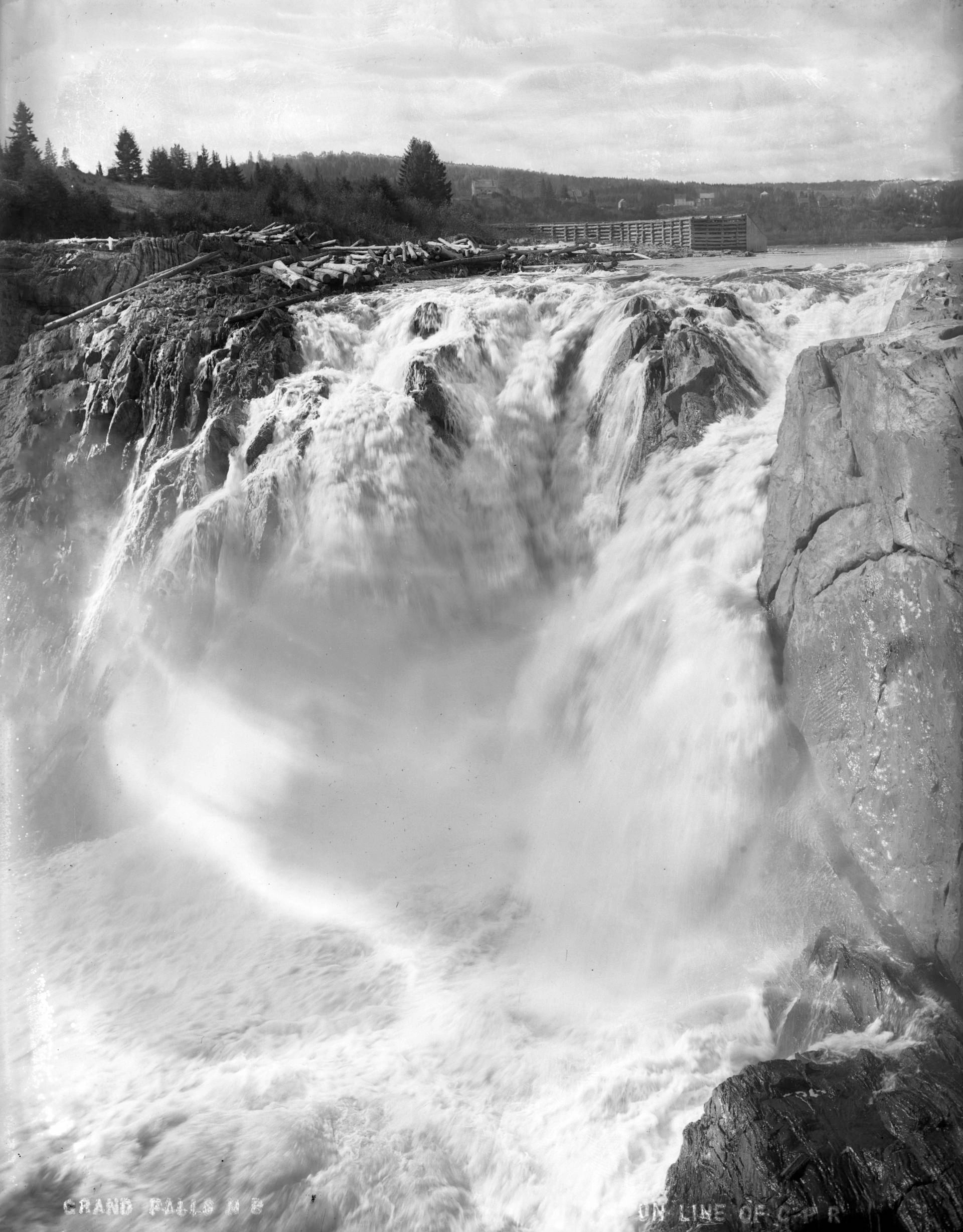
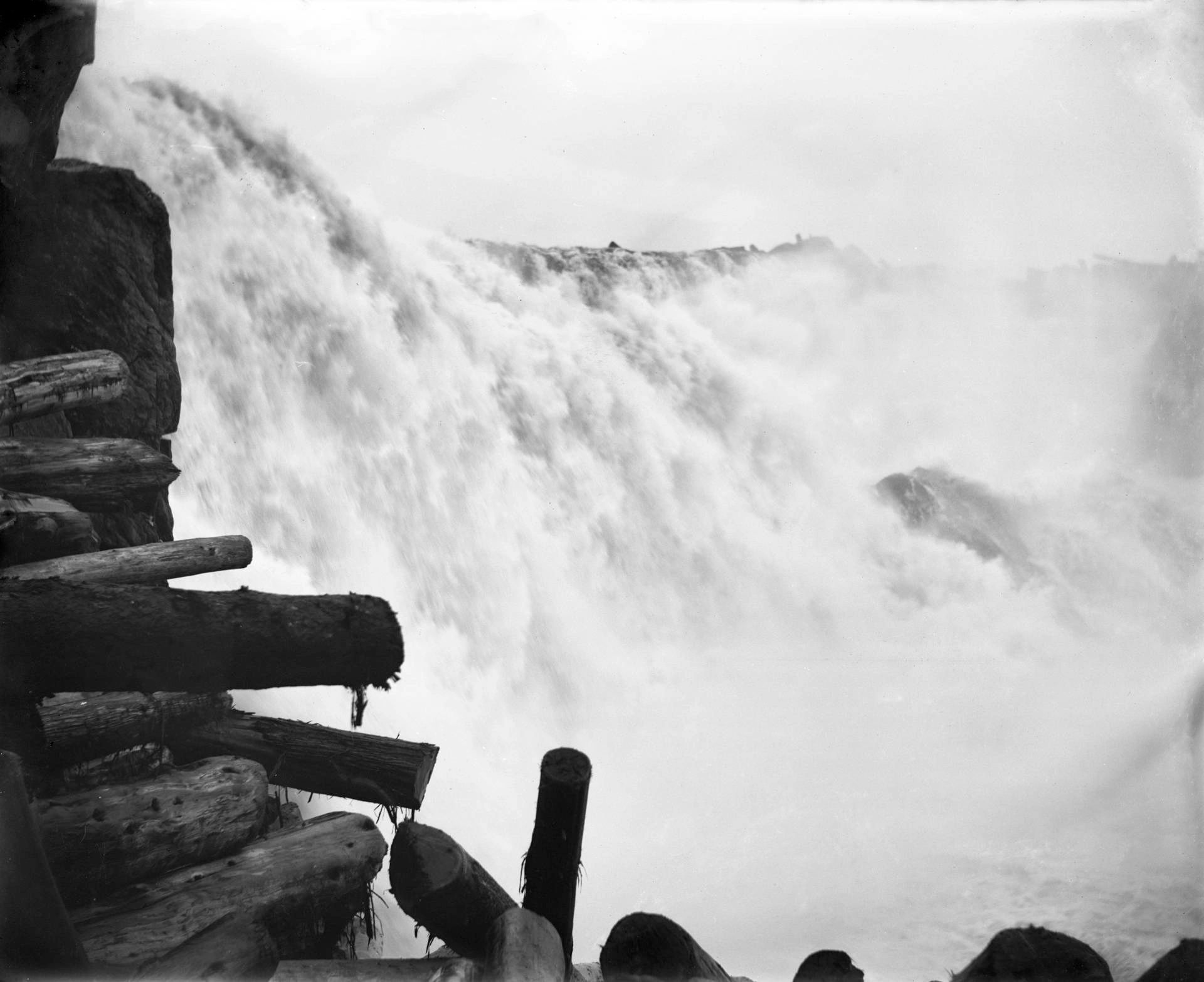
In reality, they were already only a few hundred feet from Grand Falls — one of the largest waterfalls east of Niagara Falls, with a ferocious 23-metre (75-foot) drop.
As the roar grew louder, the invaders realized Malobiannah had tricked them and led them into a deadly trap. By then, it was too late — they were already trapped in the current.
“Realizing the imminent danger,” the authors wrote, “they jumped out of their canoes… but it was too late. . . Screaming curses, they disappeared in the cataract foam, still hearing the cries of triumph of the heroic daughter of the vanquished with whom mingled the names of her fiancé and her nation avenged.”
Malobiannah became a legend.
“The heroine was sung in verse in the Abenaki, French and English languages,” wrote the collective of authors of the lost Republic, adding “But what a rich theme for the future novelist of Madawaska!”
The authors of L’Histoire de Madawaska concluded with a line that still echoes just how deeply Malobiannah’s sacrifice was felt, and how inspirational her story became:
“Greek history, so fertile in chivalrous gestures of all kinds, offers nothing greater nor anything more sublime than the simple and ignored sacrifice of the obscure girl from the woods.”
OTHER GRAND FALLS STORIES: