
Miscou Island was said by Mi’kmaq to be the home of the ferocious GouGou monster, which early explorer Samuel de Champlain had a close encounter with.
“There is still one strange thing worthy of account,” wrote French explorer Samuel de Champlain in his diary in 1603, “which many [Mi’kmaq] have assured me was true; that is, that near the Baie des Chaleurs, toward the south, there is an island where a frightful monster makes his home, which the [Mi’kmaq] call GouGou."
As he penned those lines, Champlain's ship was anchored off of Miscou Island. His crew would soon row ashore and encounter the monster.
Exactly 300 years later, in 1903, naturalist and historian William F. Ganong arrived on Miscou to survey the island for scientific purposes.
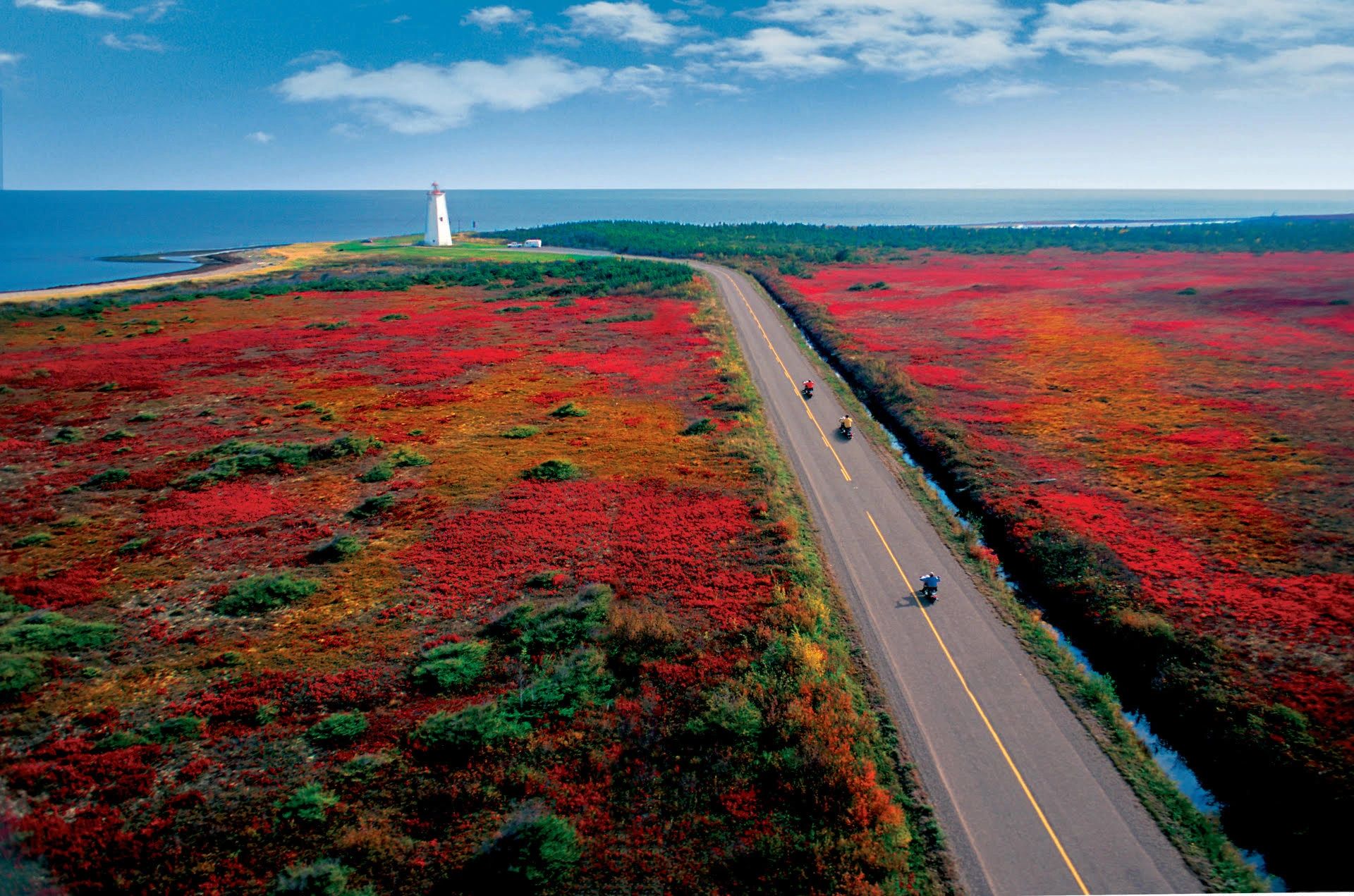
He noted that the name “Miscou” comes from the Miꞌkmawiꞌsimk word m’susqu, which means low wet ground. Ganong, who had to trudge up and down the boggy island on foot while surveying, sourly commented this was “an admirably descriptive name.”
As Ganong surveyed, he was surprised to find no Mi'kmaq pre-European "village site or burial place indicating permanent occupation" on Miscou itself. However, he did find extensive signs of Mi'kmaq camps on a tiny, rocky, elevated island inside a bay, inside of Miscou.
That little island has captured imaginations ever since with its intriguing name in three languages: in English, it is called Money Island; in French, Ile du Tresor, which means Treasure Island; and in Miꞌkmawiꞌsimk it is called Cache, which means hiding place.
Ganong noted that Money Island was home to a great deal of archaeological finds which suggested that Mi'kmaq "resorted here in large numbers, as they must have done for ages before. They sought no doubt the sea-fish, water-fowl, walrus and seals, then so abundant. … But the [Mi’kmaq] have since vanished.”
Ganong concluded that Mi’kmaq hunted on Miscou during the day, and retreated to the safety of Money Island to spend the night.
The implication was that there had been something dangerous out there on Miscou Island.

Three hundred years earlier, in 1603, as Samuel de Champlain's ship was anchored off of Miscou, his Mi'kmaq allies warned him about the GouGou monster living on the island.
Champlain was only 23 years old at the time. Already on his voyage exploring the Maritimes, he'd encountered several creatures which, as far as he and his fellow Frenchmen were concerned, were pretty monstrous. These included moose, lynxes, bears, "caribou as big as [donkeys]" and, most alarming of all to the young explorer, flying squirrels. (Going by his diary, Champlain seemed to have quite the a phobia of flying squirrels!)
He recorded how the GouGou monster was described to him in his diary:
"They told me the GouGou had the form of a woman, but very terrible, and of such a size that they told me the tops of the masts of our vessel would not reach to his waist, so great do they represent him; and they say that he has often eaten up and still continues to eat up many [Mi’kmaq]; these he puts when he can catch them, into a great pocket, and afterwards he eats them, and those who had escaped the danger of this awful beast said that its pocket was so great that it could have put our vessel into it.”
Champlain had no follow up questions. For him this GouGou monster sounded just as plausible as a moose, and much more realistic than a flying squirrel, both of which he'd already encountered.
He did, however, note with interest that GouGou had been very seldom actually seen by his Mi'kmaq friends. Usually it was only ever heard.
Champlain wrote: “This monster makes horrible noises in this island.”
He decided to explore Miscou anyway.
Perhaps wary of encountering a monster, Champlain himself opted to stay on his ship. Instead, he ordered priest Sieur Prevert, accompanied by a team of Frenchmen, to go explore the island.
The crew rowed to the shores of Miscou and disappeared out of sight of the waiting ship.
Soon, the little crew of explorers returned in a panic.
When the rowboats got back to Champlain's ship, the explorers claimed they heard the GouGou monster.
Champlain wrote in his diary: “Sieur Prevert from St. Malo told me that . . . he passed so near the haunt of this terrible beast, that he and all those on board his vessel heard strange hissings from the noise she made.”
He noted that the priest's report alarmed his Indigenous friends, writing: “The [Mi'kmaq] with him told him it was the same creature, and that they were so afraid that they hid themselves wherever they could, for fear that she would come and carry them off.”
With his own crew and his Mi'kmaq allies alike in an uproar over hearing GouGou monster, Champlain ordered a quick departure.
The French avoided Miscou for years afterwards.

Three hundred years later, in 1903, William F. Ganong tried to unravel this strange encounter more thoroughly and scientifically.
The records seemed to show the GouGou only being heard and not seen.
This suggested that perhaps a natural phenomenon of some sort might have caused the frightening noises on Miscou. However, Ganong had surveyed every square meter of Miscou and never heard the mysterious sound.
While Ganong wasn't able to figure out what caused the sound, he did pinpoint the exact moment when the noise likely disappeared forever — regardless of what had caused it.
In 1628, a quarter of a century after Champlain's crew had fled the GouGou monster, a fleet of British privateers led by the Kertk brothers landed on Miscou.
The six British ships were plotting to attack Quebec. However, they had a problem: their gunpowder was damp.
They laid out their gunpowder on the beaches of Miscou to dry.
Then one sailor lit his pipe.
A spark ignited the gunpowder. A terrible fire quickly roared across Miscou, burning the entire island.
Whatever caused the strange sound which had frightened Mi’kmaq and had been heard by Champlain’s French explorers disappeared after the fire, and was never heard from again.
More William F Ganong Investigation Stories:
Old Ned, The Lake Utopia Monster (Appears in Book One)
The Ghostly Fire Ship of the Baie des Chaleurs (Appears in Book Two)
The Mysterious Lake Utopia Medallion (Appears in Book Two)


