On the morning of September 4th, 1936, Beryl Markham was woken up by the ringing of the telephone. It was the Royal Air Force.
“If you are still determined to fly the Atlantic this late in the year,” the voice said, “the Air Ministry suggests that the weather it is able to forecast for tonight, and for tomorrow morning, will be about the best you can expect."
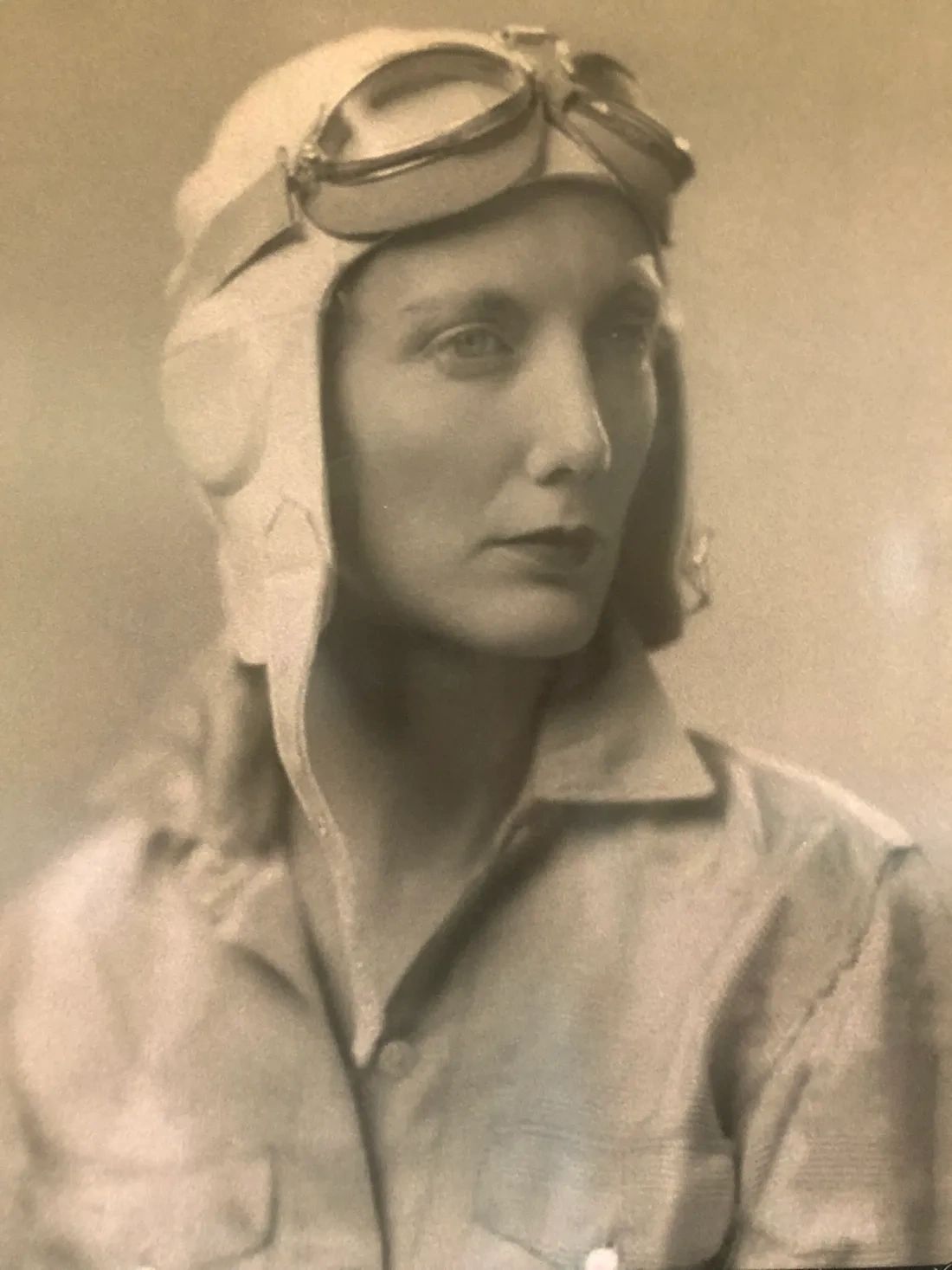
It wasn’t exactly reassuring news for the day she had chosen to attempt to fly solo from England to New York City.
The idea for the flight had come up casually at a dinner party. She wrote that she distinctly remembered the “almost ghoulish grins” of a group of rich men as they’d said:
"‘A number of pilots have flown the North Atlantic, west to east. … Nobody has done it alone from England — man or woman. I’d be interested in that but nothing else. If you want to try it Beryl, I’ll back you. … Want to chance it?”
“Yes,” she replied.
“Gee, I wouldn’t tackle it for a million,” the rich men told her. “Think of all that black water! Think how cold it is!”
“I had thought of both,” she wrote.
That morning, she summed up the stakes in her autobiography, West With The Night, with typical coolness:
"By tomorrow morning I should either have flown the Atlantic to America — or I should not have flown it. In either case, this would be the day I would try."
This was the golden age of aviation, when record-breaking flights turned pilots into international celebrities. But if Markham was chasing publicity, she had a strange way of showing it.
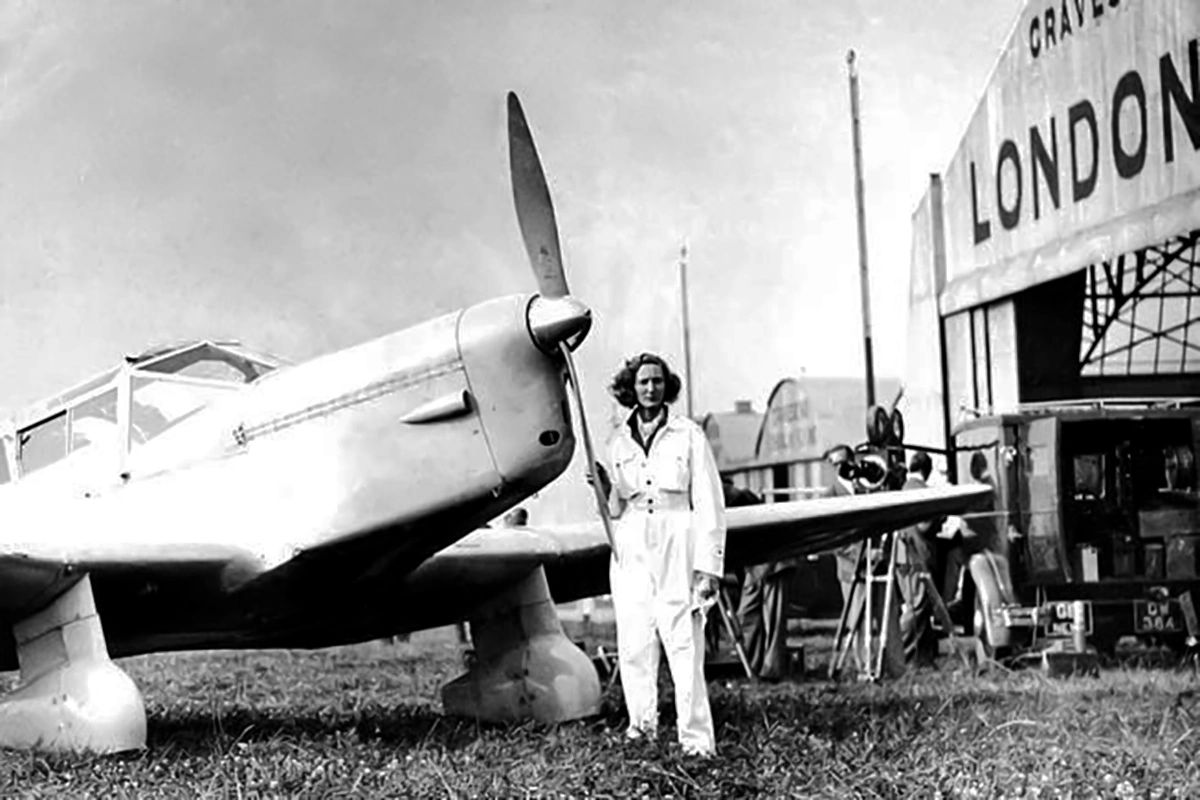
On the day of her departure from Abingdon, she asked that spectators and reporters be kept well out of sight. She did not want to see them. Nor did she want them watching her.
One of the few who was allowed near the runway was Jim Mollison. He had once been so great an aviator until his alcoholism and his frequent crashes — including two in The Maritimes, one in Pennfield, N.B. and one near Sydney, N.S. — had ended his flying career.
Mollison removed his watch and handed it to her, telling her it was his lucky watch and that this was a loan. She had to give his watch back after surviving the flight.
Then she took off.
As her blue-and-silver Gull lifted off the ground, she wrote that it felt like it asked her: “Now, where are we bound?”
“The question had frightened me,” Markham wrote.
“We are bound for a place thirty-six hundred miles from here — two thousand miles of unbroken ocean. Most of the way it will be night. We are flying west with the night.”
As Jim Mollison stood watching the small plane disappear into the distance — its pilot wearing his lucky watch — he turned to another onlooker and flatly declared: "That’s the last we’ll see of Beryl!"
It seemed that, despite his gesture, he did not truly believe she would survive.
Out over the Atlantic, Markham flew into worsening weather. Rain hammered the plane. Darkness swallowed the horizon. “The voice of the man at the Air Ministry had not promised storm," she wrote.
She wrote that it was pitch dark inside and outside of the cabin: “I am flying blind. A beam to follow would help. So would a radio — but then so would clear weather.”

In her book, Beryl Markham eloquently described how it felt flying the Atlantic completely alone in the dark with no distractions:
"I feel the security of solitude, the exhilaration of escape. … Being alone in an aeroplane for even so short a time as a night and a day, irrevocably alone, with nothing to observe but your instruments and your own hands in semi-darkness, nothing to contemplate but the size of your small courage, nothing to wonder about but the beliefs, the faces, and the hopes rooted in your mind — such an experience can be as startling as the first awareness of a stranger walking by your side at night. You are the stranger.”
Her fuel line began leaking, the smell filling the cabin. The wind picked up, and the rain fell harder.
Finally, in the distance, only forty or fifty miles away, she spotted land.
It was, however, most certainly not New York City. She’d gone wildly off course.
Some rough calculations on her map surprised her — that land was Cape Breton.
Her engine began sputtering and coughing. Cutting out, kicking back to life, then dying again. She wrote:
“Each time it spurts to life I climb as high as I can get, and then it splutters and stops and I glide once more toward the water, to rise again and descend again, like a hunting sea bird. … I snatch my map and stare at it to confirm my whereabouts … only twelve minutes from Sydney Airport … The engine cuts once more and I begin to glide but now I am not worried; she will start again … But she doesn’t start. This time she’s dead as death.”
She glided over Cape Breton and was taken aback. It wasn’t any earth she knew — the soil was black and pockmarked with boulders.
It was a bog, and, she wrote, her plane was falling fast:
“The earth hurries to meet me … The nose of the plane is engulfed in mud, and I go forward, striking my head on the glass of the cabin front, hearing it shatter, feeling blood pour over my face.”
“I stumble out of the plane and sink to my knees in muck and stand there foolishly staring, not at the lifeless land, but at my watch.
Twenty-one hours and twenty-five minutes.
Atlantic flight.
Abingdon, England, to a nameless swamp — nonstop."

Editors at the Cape Breton Post were assembling the day’s stories on September 6th, 1936. Big news included a feature about the newspaper treating its paperboys to a seaside outing at Point Michaud Beach. Another headline covered a ferry to North Sydney that had been delayed when the pilot gallantly turned back to the pier to pick up three pretty girls who’d arrived late.
They were just putting the finishing touches on what was set to be the front-page splash — ten-year-old Pierce Mills had wiped out on his bicycle and scraped his arm — when the newsroom phone rang.
On the line was 20-year-old telephone operator Edith McGinnis with a proper scoop.
She had just received a call from none other than famous pilot Beryl Markham, who was attempting to become the first person — man or woman — to ever fly solo from England to North America.
Everyone knew Beryl Markham was headed for New York City. But Edith had eavesdropped.
Markham revealed that she had crash-landed in a bog in rural Cape Breton. She was in Baleine Cove — an isolated fishing outpost on the easternmost tip of the island, home to about twenty hardscrabble fishermen.
Earlier that day, an airplane had drifted over Baleine Cove. Three local children — two Burkes and a Perry — raced off, following the unusually quiet, low-flying white plane as it disappeared over the hills.
Markham’s engine had died. She had been gliding along the coast, searching desperately for a place to put the plane down. When they crested a hill, the children saw a small white airplane embedded in the bog, nose buried deep in mud, tail sticking straight up.

Its cabin door hung open.
“"Cape Breton Islanders found me … floundering in the embracing soil of [their] native land,” Beryl Markham later wrote her autobiography, West with the Night.
“The black mud had got up to my waist and the blood from the cut in my head had met the mud halfway.”"The youngsters, highly excited, started across the swamp … eventually reaching the harried woman who was waist deep in the slime and much of the melancholy swamp land," wrote a reporter for the Sydney Post-Record.
“ … I came toward them like a citizen of Hades," Markham wrote.
The children of Baleine Cove recalled she exclaimed, "That was a beastly trip! That was a ghastly trip!" Beryl Markham wrote that the kids "took me to this hut on the edge of the coast … built up upon the rocks there was a little cubicle that housed an ancient telephone — put there in case of shipwrecks. I telephoned Sydney Airport."
That phone call — or more precisely, the operator telling the press about it — set the global media machine in motion.Meanwhile, the Cape Bretoners brought her to a doctor.Dr. O’Neill wasn’t shocked to see a muddy pilot on his doorstep.
Cape Breton was the last bit of land before the Atlantic. It was a popular place to make an emergency forced landing.He recalled Markham’s first words were to apologize for failing to make it to New York, saying: "It’s the engines, you know."
Local nurse Jean Dunning arrived with her husband’s oversized pyjamas, correctly assuming Markham hadn’t packed a spare outfit and that the doctor wouldn’t think to offer one.Beryl Markham donned the Cape Breton man’s oversized pyjamas and promptly fell asleep.
While she slept, reporters discovered her location and tried to force their way into the doctor’s house for a photograph. Nurse Dunning physically blocked them. One reporter quoted her yelling at them:
"You will not invade the sleeping quarters of this extremely courageous woman!"
By then, the story had exploded worldwide. The New York Times ran the headline: "Mrs. Markham Crashed In A Cape Breton Field After Crossing Atlantic!"
Back in Cape Breton, local reporters declared it the biggest news out of Baleine Cove "since the historic capture of Louisbourg."
At the crash site, souvenir hunters poked around the wreckage. One man was prying off the window stripping when two constables arrived to stop him. Others found raisins scattered on the cabin floor and quickly ate them.
Old newsreel footage still survives from when American reporters arrived in Baleine Cove. It shows a dozen Cape Bretoners standing in front of their modest homes, all dressed up in their Sunday best for the cameras. They smile and wave for the cameras, and a few even make funny faces. Then, as the camera continues to roll, capturing images that will soon be seen by millions around the world, they crowd together and embrace one another.
The film then cuts abruptly to New York City: thousands surging forward, police straining to hold them back, skyscrapers rising in the background.When Beryl Markham woke, she was no longer a stranded pilot in a bog. She was the biggest news item in the world.

Despite Dr. O’Neill telling her she needed more rest, the American media insisted she immediately fly to New York City.
As soon as she arrived, she learned that her lover and mentor, pilot Tom Black, had died in a freak accident on a runway in England. She considered herself a failure for not making it to New York under her own power. She almost certainly had a concussion.
25,000 people waited to greet her at the airport.
“I don’t think I deserve this wonderful reception…” she told the crowd. They thought it was a joke.
When asked by a reporter, “Would you do it again?”
She replied, “Not if I could help it!”
She soon retreated from the limelight. She wrote West With The Night.
Ernest Hemingway praised it lavishly, writing: “This girl … can write rings around all of us who consider ourselves as writers.”
The book sold poorly and went out of print.Nearly fifty years later, it was rediscovered and reprinted. Markham, living quietly in Kenya, was found and returned to public life, feted for her feat decades earlier.
Apparently, at long last, she was ready for the fame that had first arrived — unexpectedly — in a Cape Breton bog.


