Tom Picot watched idly as an ominous, large, dark spot passed under the tiny fishing boat he and his father were aboard near Bell Island, Newfoundland.
Being a 12-year-old boy, his natural reaction was to smack it with a paddle. The dark spot under the water turned out to be a monstrous sea creature which “reared above the waves … displaying to the horrified fishermen a pair of great eyes, gleaming with rage, and a horny beak.”
NOTE: This is an abbreviated version of this story for the newspapers (who only allow me 1000 words per week), the full version can be read here, or in the book Backyard History: Forgotten Stories From Atlantic Canada's Past. This episode of the Backyard History Podcast is a big fan favourite!
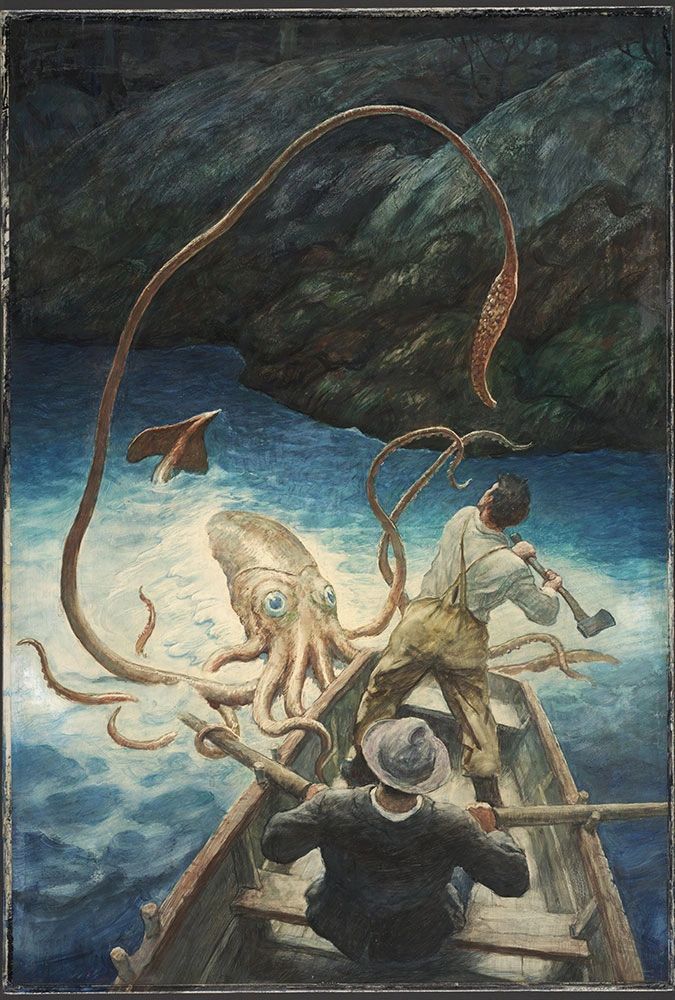
“The next instant a long, thin, corpse-like arm shot out … It was immediately followed by a second arm, much stouter but shorter, and both, in some mysterious way, glued themselves to the boat which presently began to sink,” later recounted Reverend Moses Harvey.
“The terror-stricken fishermen were completely paralyzed and thought their hour had come.”
Tom Picot grabbed a hatchet from the bottom of the boat and, the Reverend continued: “The brave little fellow dashed forward and with two or three quick blows cut off both arms [that] lay over the edge of the boat. … Then the huge slimy mass seemed to slide off and … disappeared.”
From the moment ancient humans built the first fragile little boats, they worried about what lurked in the deep, dark, cold, and mysterious waters below. Stories of strange and terrifying underwater creatures appear across time in every culture.
The first sea monster story in Atlantic Canada may have been the Mi’kmaq Jipijka'm [pronounced chih-pitch-kawm], described as a huge, scaly, dragon-like serpent with long teeth and a single big horn.
Tom Picot’s encounter with the sea monster happened much more recently, on October 25th, 1873.
It was a heady time of modern scientific progress.
Railways linked Canada’s coasts.
Undersea telegraph lines connected continents.
Nobody believed in sea monsters anymore.
Yet Tom Picot came to shore with hard evidence that he had actually been attacked by a bona fide sea monster: the two tentacles he’d hacked off the creature.
This evidence, however, was quickly disappearing. The young boy fed the smaller tentacle to his dog.
Only one piece of evidence remained: a 19-foot-long tentacle.
But what is a 12-year-old boy to do with a 19-foot-long tentacle?
Tom Picot consulted the local village priest. He had no idea what to make of the bizarre incident but thought he knew of someone who might.
“The clergyman of the village … recommended him to bring it to me,” Reverend Moses Harvey wrote in Wide World Magazine, “as I was, in his words, “crazy after all kinds of strange beasts and fishes!””
And so young Tom Picot headed off to St. John’s with his giant tentacle to go find Reverend Moses Harvey. He was no ordinary clergyperson, but an extremely prolific McGill-educated scientist who published an estimated 900 papers.
“The next day,” the reverend wrote, “Tom presented himself at my door in St. John’s, asking “would you like to buy the horn of a big squid?” He told me the whole story … in a casual way.”
Tom Picot had evidence of a giant squid, a creature long dismissed as tall tales of sailors at sea. Harvey paid the boy handsomely for the tentacle, and bragged that he was now “the possessor of one of the rarest curiosities in the animal kingdom!”
He deduced from the tentacle that the giant squid’s full size might have been up to 40 feet long and weighed between 1000 and 1200 lbs.
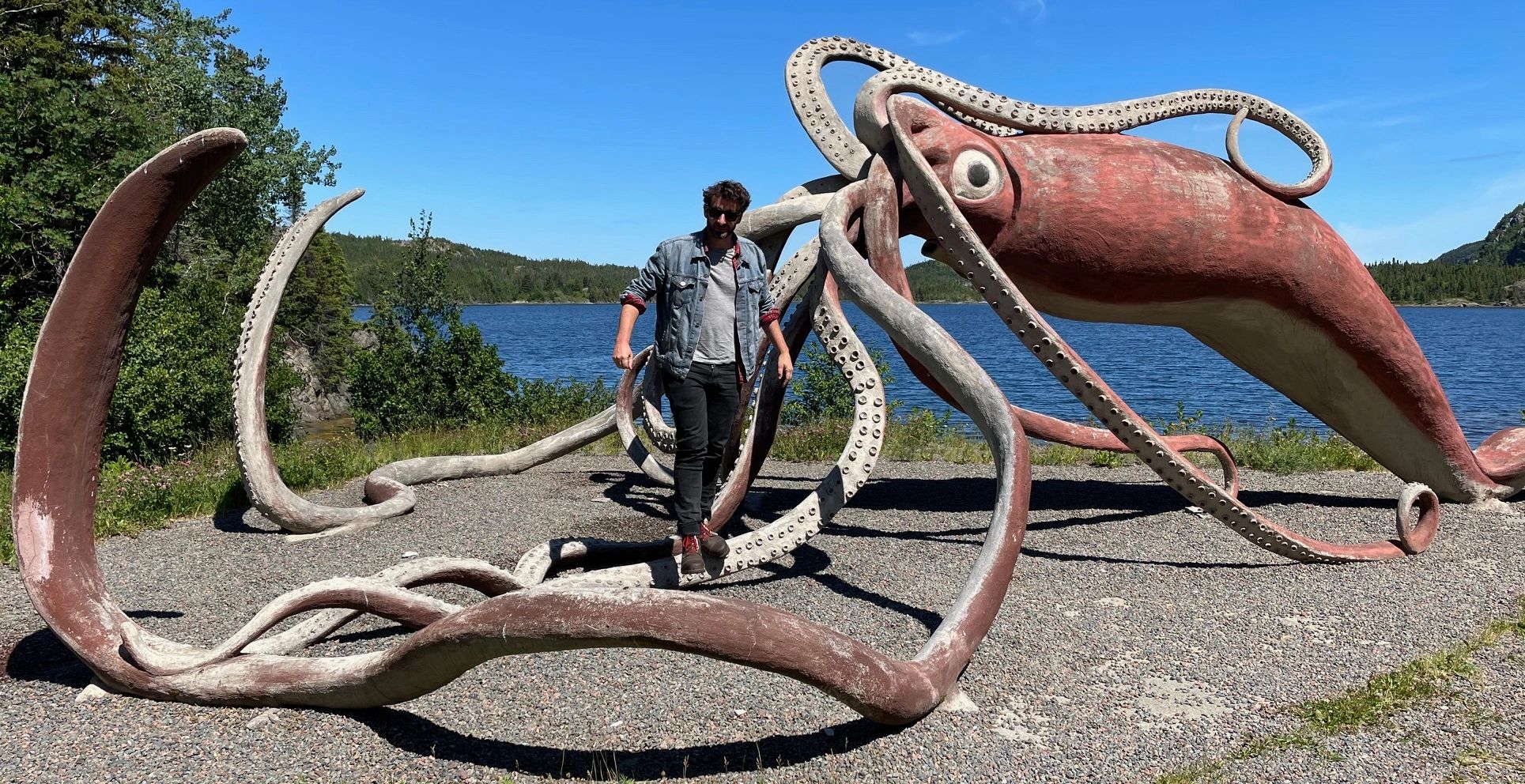
Now Reverend Moses Harvey had to convince his scientific peers around the world the beast associated with the Vikings’ kraken or the Bible’s leviathan was a real thing.
That would not be easy — Victorians were not only skeptical, but could be cruel. When Swiss sailor Louis de Rougemont claimed to have seen a giant squid during a shipwreck ordeal, he was invited to give a talk about it to a packed theatre in London. As he walked onto the stage, a banner was unfurled above him reading “The Greatest Liar On Earth.” The crowd booed him off the stage.
Harvey was in luck though, because only a matter of weeks later, he heard reports that a second giant squid had appeared around Newfoundland. He raced to the scene and arrived to find local fishermen about to chop it up to use as manure.
Reverend Harvey offered to buy the dead giant squid, much to the surprise of the fishermen, who, he wrote “evidently thought me “cracked” for paying away so much money for a nasty brute which nearly cost them their lives.”
Four fishermen had pulled up their nets and “When the contents of the net came into view, they were horrified to see a pair of large cruel eyes glaring at them, and a confused mass of ghastly white arms wiggling in the meshes of the net and struggling to get free.”
The giant squid lashing around threatened to knock over the boat, so a fisherman stabbed it to death.
Now in possession of a whole, albeit much smaller, dead giant squid, Harvey wrote “My happiness was complete!”
Now he had to sort out how to somehow get this to the world’s scientific establishment. He had an idea, writing: “The photograph … could not tell a lie!”
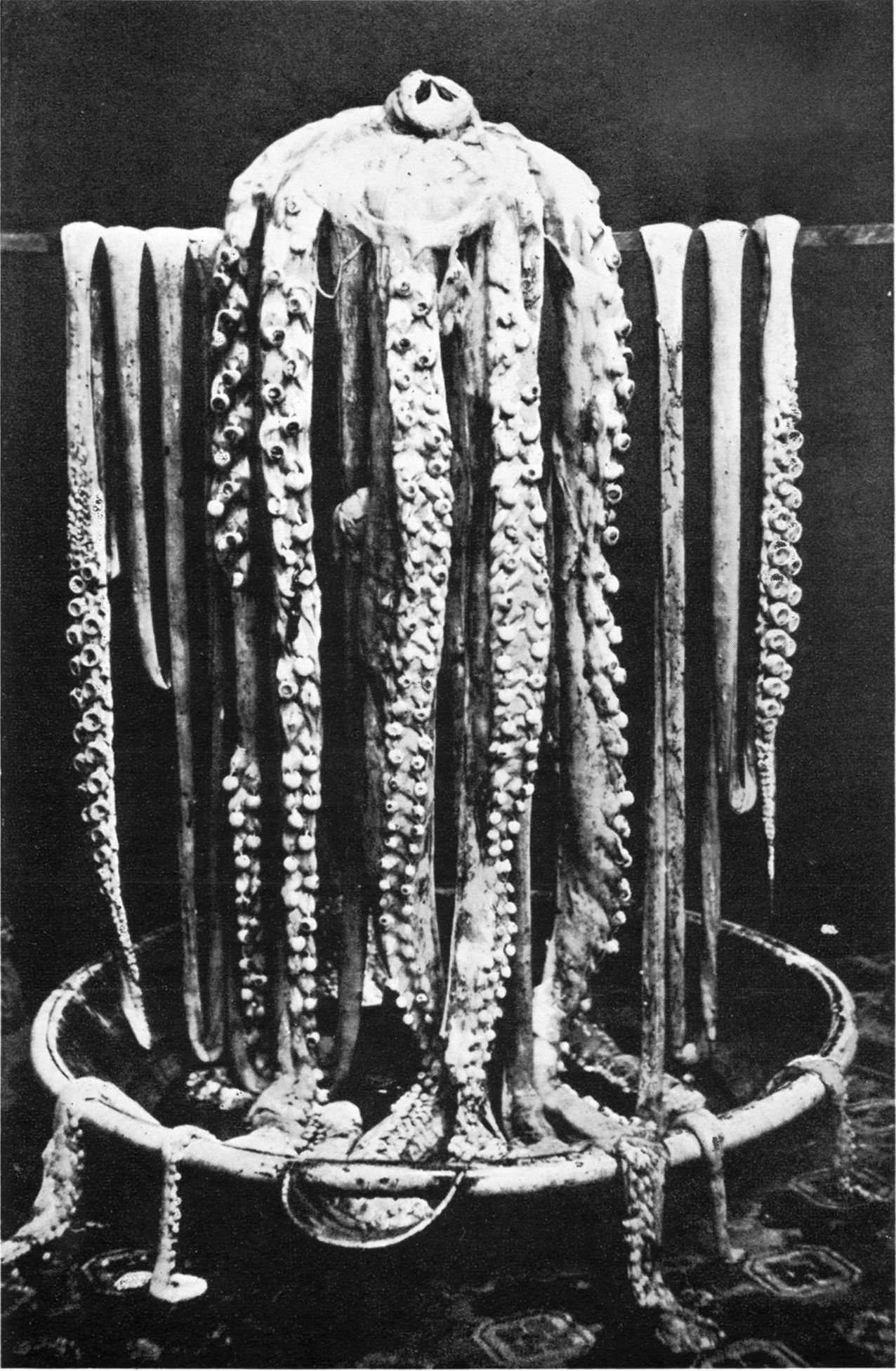
To pose it, he draped the dead giant squid over his bathtub, or as he called it, “my sponge bath.” He then hired some movers to drag the dead giant squid, complete with his bathtub, down the streets of St. John’s to a photography studio.
The resulting photo, (which accompanies this article) was, in Harvey’s opinion “a beautifully executed embroidery.”
The Newfoundland giant squid attracted attention from all over the entire world.
Including from the Smithsonian in Washington DC where a replica hangs from the ceiling today.
“From being a mythical personage … my giant has got a scientific name and an honoured place in the pages of natural history, and is now highly respected,” wrote Reverend Moses Harvey.
He named it after himself; the giant squid’s Latin name is Megaloteuthis Harveyi.
The full version of Giant Squid Attacks in Newfoundland appears in the first Backyard History book and is also one of the most popular episodes of the Backyard History Podcast!


