For exactly one year to the day, beginning on New Year’s Eve 1901, Nellie McGowan kept a diary. It appears that she began her diary because she was investigating a mystery.
It’s not a great mystery of important historical consequence. Nellie was trying to solve whether or not her older sister Bessie secretly had a boyfriend.
The thing that makes Nellie McGowan’s diary so unique is where she was writing it.
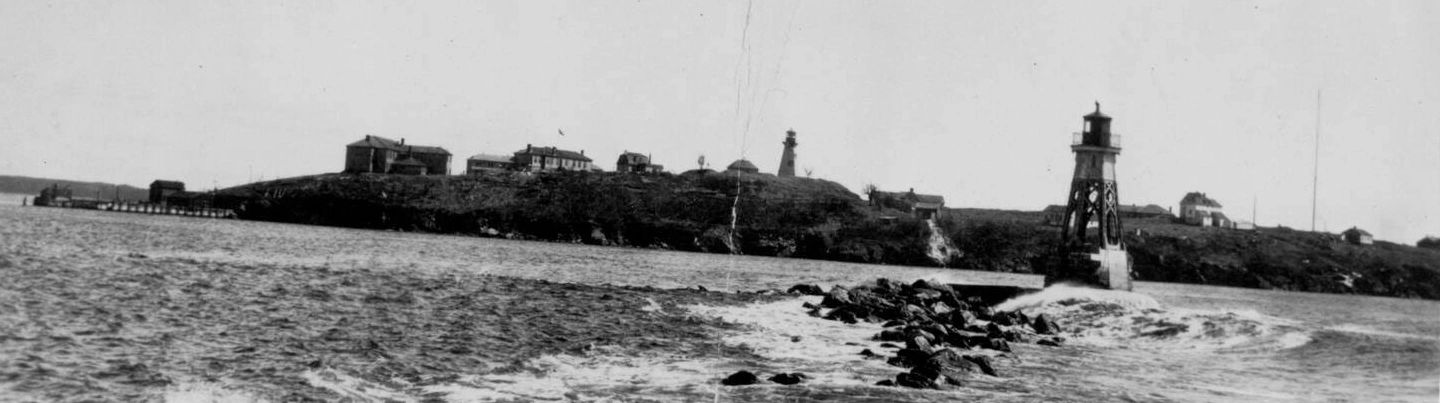
Nellie McGowan lived on Partridge Island, a quarantine site for new immigrants arriving to Canada on ships. Some two million Canadians passed through quarantine islands between the 1890s and 1914.
Nellie McGowan’s diary offers us an incredibly unique and actually very casual and honestly quite playful view of this experience which literally millions of Canadians’ families went through, except it’s told through the perspective of a young girl with no agenda but for whom this is … simply her ordinary everyday life.

“[Tuesday December 31st, 1901] New Years Eve. “
“Fred walked over … and thereon hangs a tale. Bessie … of course did not want me to know. Poor Fred, the fun I have had over the [incident I believe happened at the] Suspension Bridge… the secret made it all the more fun for me.”
Begins the opening words of Nellie McGowan’s diary. She believed that her sister Bessie and her father’s assistant Fred kissed on the Suspension Bridge when they went to Saint John to celebrate New Year’s Eve.
Nellie herself had stayed behind for New Year’s Eve. Instead of catching a boat across the water to the city like Bessie and Fred, she stayed behind on her little island home called Partridge Island.
If you are standing on the waterfront of Saint John today, you can still see the light from the Partridge Island lighthouse where Nellie and Bessie McGowan once lived, circling around, and reflecting on the water.
Today that lighthouse is automated.
Back in 1902, though, it was run by Nellie’s father Thomas.
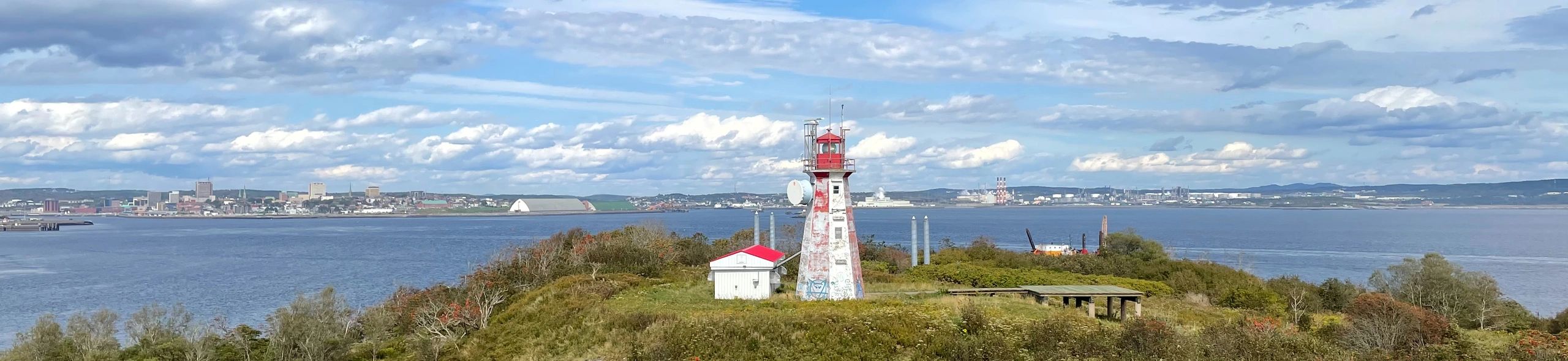
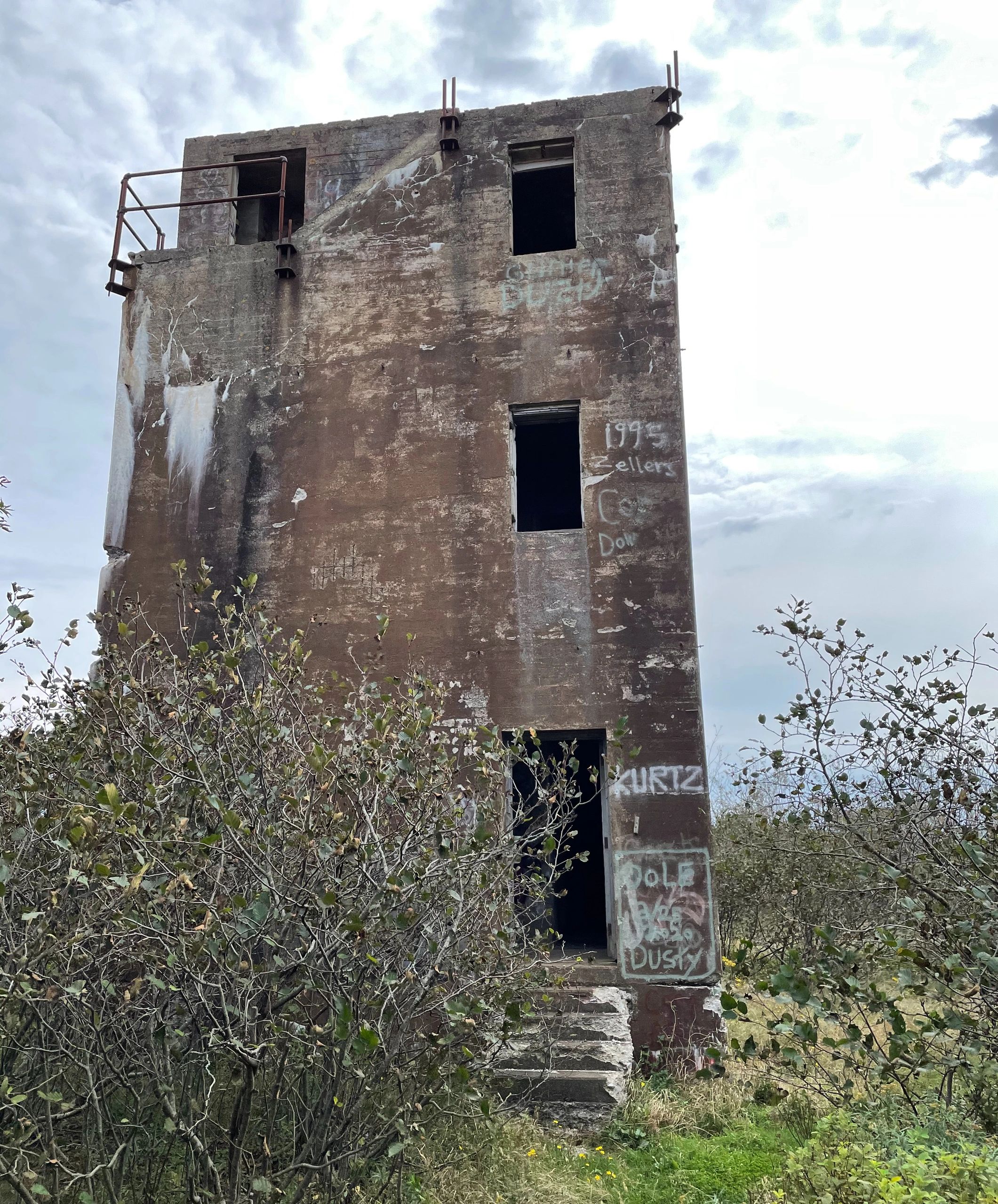
Today Partridge Island is empty except for the dilapidated ruins of several buildings. These include everything from military fortifications, to the ruins of several small hospitals.
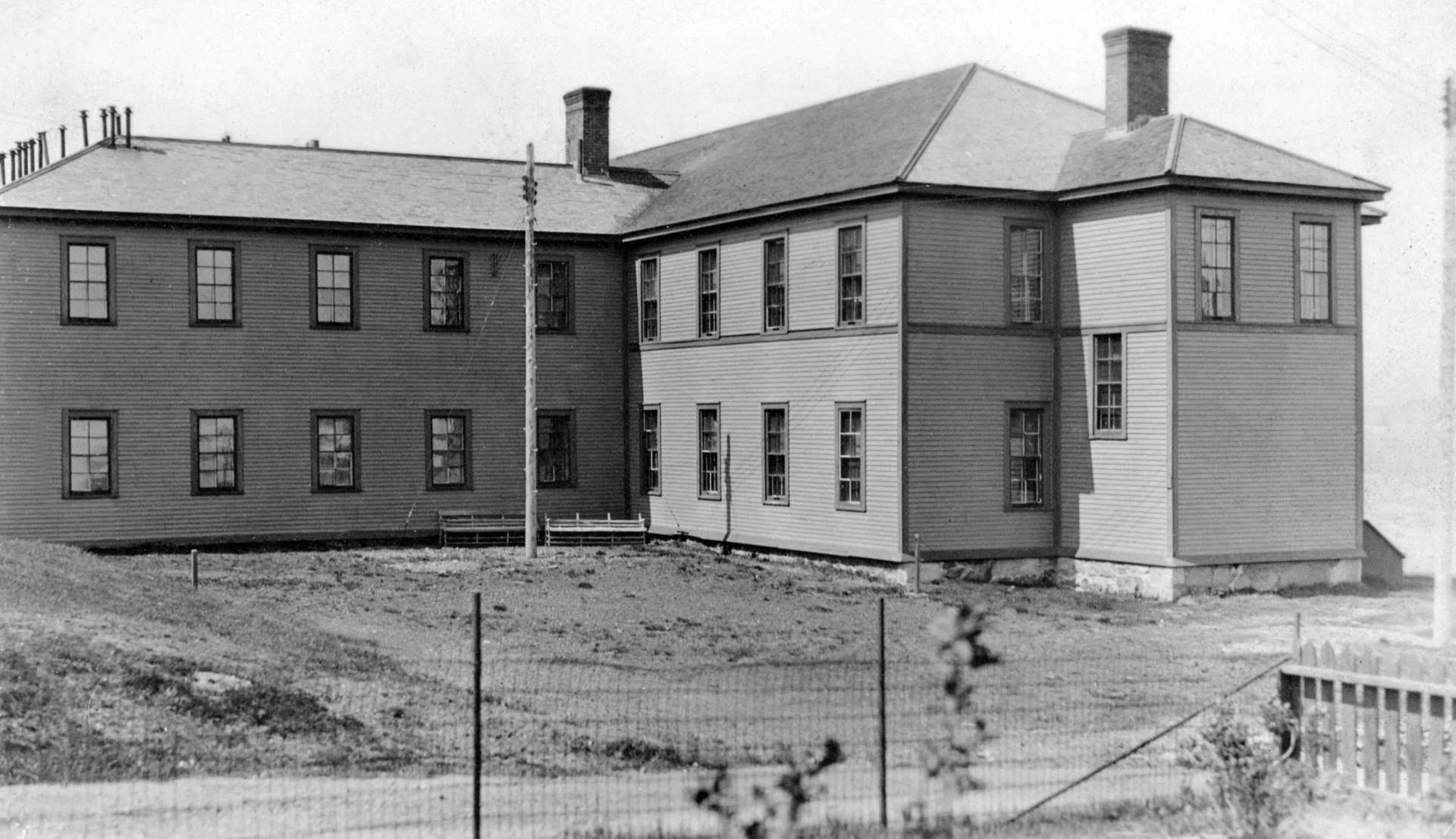
Back in Nellie’s time two of those hospitals were brand new, the peak of modern medical technology for the day, ready to be home to sick or contagious immigrants arriving on large ships which were constantly docking from Europe carrying hundreds of thousands of new immigrants coming to Canada.
Caring for the sick who were offloaded from those ships was a matter of routine daily life for Nellie.
It certainly less interesting to her than the question of whether her older sister had a secret boyfriend.
On January 14th one ship arrived, and she wrote:
“These immigrants [three families in quarantine] were very interesting. There were some fine singers amongst them and it was as good as a concert to listen to them.”
“Fred seemed to miss Bessie quite a lot and though my suspicions were aroused before I could not help watching them more closely.”

Nellie had been born on the mainland, but she spent most of her life on the island. There had only been eight other children in school with her, and they were all ages, taught in the same one-room schoolhouse.
The January ship’s passengers weren’t very sick and were released into Canada shortly afterwards, and most headed out west to Canada’s then-booming Prairie provinces. The particular group aboard that ship seemed to have been Jewish refugees escaping persecution in Russia.
In early February another ship arrived, this time carrying significantly more sick people aboard.
“Another storm is brewing,” Nellie wrote, “and the first word on Sunday is a steamer [is] outside the island with small-pox on board.”
Smallpox has today been eradicated in one of mankind’s greatest public health triumphs.
However, for much of human history it was the deadliest, the most contagious, and the most widely feared disease.
“The patients [were] to be brought ashore if possible at once. Bessie went up to get the hospital ready and the boys went off with the ambulance to bring the [patients] ashore. Bessie expected to have to nurse and we were rather frightened about it. The storm raged all afternoon … it was too bad for a sick person to land.”
The fear was not only of getting sick, but also of quarantine. If there was an outbreak of smallpox on the island, nobody would be allowed to leave.
“I was glad I had got a new hymn-book. If we were all to be quarantined there would be time for singing. [My] poor [older brother] Jack was rather scared at the idea of smallpox.”
After the sick immigrants were finally unloaded from the ship, Nellie wrote about the next steps for the workers on Partridge Island:
“Everyone is kept busy all the time as the clothes all have to be disinfected and the men have to bring all the provisions down, pump water, and carry coal. Father has to attend the hospital.”
The sick passengers on this ship, the S. S. Alcides, were coming from Scotland.
“The men are all Scotchmen and a lively lot. … One of them asked Fred one night how he got along in his courting. I have kept it up ever since.”
In perhaps a sign that younger siblings have not changed at all since 1902, Nellie decided to play a prank on the man she suspected to be her older sister’s secret boyfriend. To do so she enlisted the help of a nurse named Gertie who was headed over to Saint John…
“I arranged with Gertie to send down a post card on St. Valentine’s Day with a picture of the Suspension Bridge on it and sure enough it came in good time for Fred’s surprise. He was puzzled at first but soon suspected a trick…”
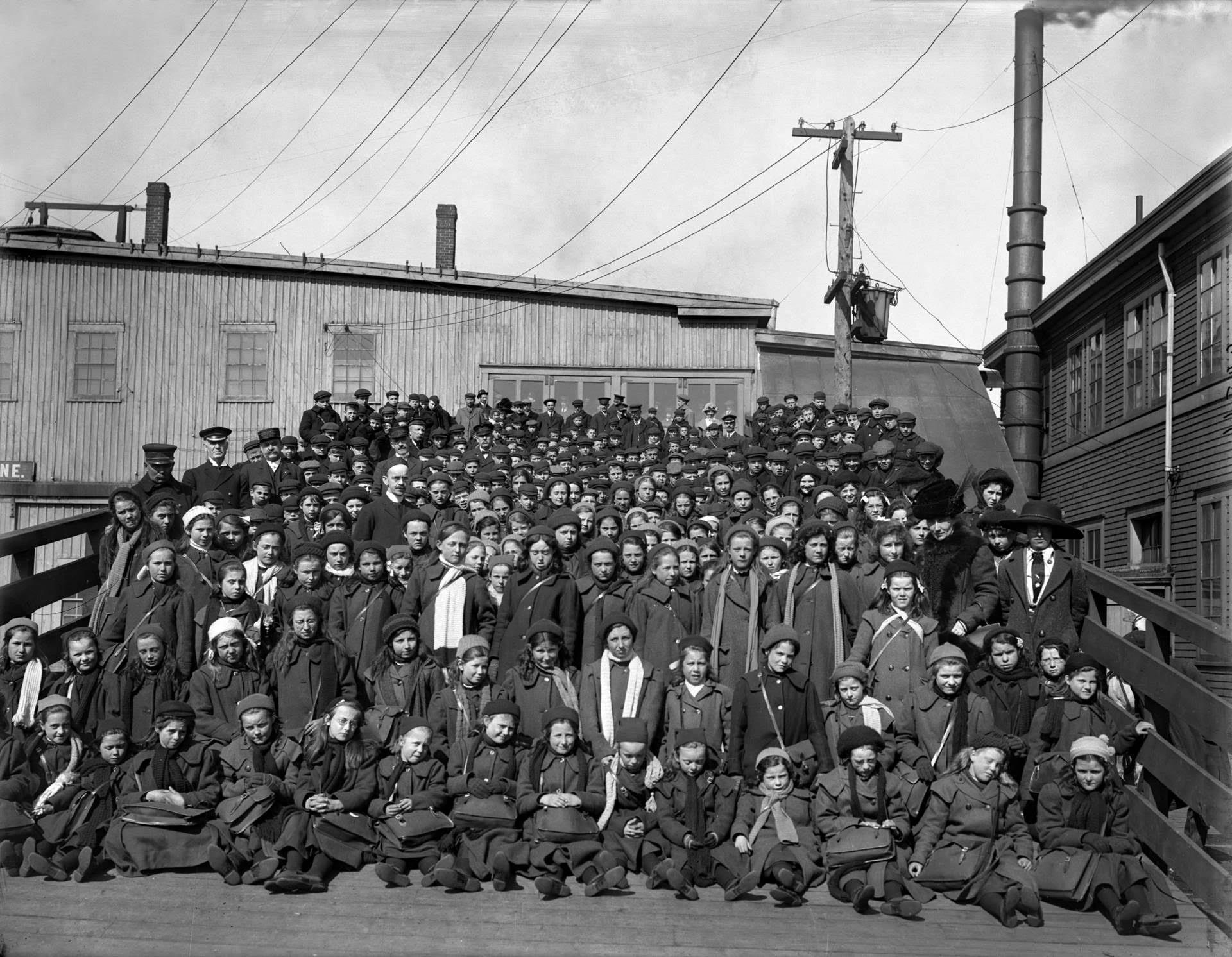
Partridge Island had been used as a quarantine site for sick immigrants’ fever since the Loyalists first arrived in 1783.
It’s best known for an extraordinarily dark event that happened half a century before Nellie McGowan’s time. In 1847, thousands of desperate, hungry, and sick Irish immigrants were quarantined while fleeing the Irish Potato Famine. At that point, there was only one hospital with 100 beds on Partridge Island, which left the Irish with inadequate food, clothing, and tents.
According to Saint John historian Harold Wright, who discovered and compiled Nellie McGowan’s diary back in 1984 (though he is contemplating a re-issue), there are an estimated 1000 people who died on Partridge Island still buried there. The vast majority of them died in 1847.
The events of that year sparked a flurry of acrimony and investigations, and Partridge Island quarantine station was shut down.
Forty years later, as a new wave of immigrants Canada arrived. Partridge Island was reopened, but lessons had been learned from the earlier disaster.
This time the quarantine station was well-funded, staffed, and equipped.
This resulted in drastically different outcomes for the people who were quarantined. For example, Nellie McGown wrote that all of the patients from that Scottish ship recovered.
“It was fortunate that no more cases developed … the crew were released and [that] evening Bessie and I went to the Dr’s and found them preparing a supper in honour of the officers and the captain. … we heard all the songs and speeches. I hadn’t heard such broad Scotch before. Bessie was delighted.
That March a ship arrived from Ireland and was quarantined with even more sick patients.
“The sick men were very sick indeed and needed much watching.”
Meanwhile, she continued her investigation.
“Bessie’s birthday [was on March 14th] and passed without much celebration [because we were so busy but I made a nut cake with all the ring, button, thimble, and cent celebration.”
These were items that were cooked into the cake, and who got them in their pieces was supposed to be a sign of luck in the coming year.
- The ring meant that the person who found it in their cake would be the next to get married.
- The thimble was the opposite though – that meant the person would never get married and become, in the language of the time, an old maid.
- Getting the button is a sign of good luck.
- But getting a penny is a sign of poverty.
Different families had different meanings to the objects baked in the cakes, and while Nellie didn’t explain what they meant, she felt upbeat about the outcome, writing:
“Fred got the button and Bessie a cent, [a] sure sign that they will be married!”
Three days later was St. Patrick’s Day.
“On the seventeenth of March I managed to pin a leaf of shamrock on Fred and Jack’s caps without them knowing. … They were the envy of all the Irishmen on the steamer. The first mate said he would give anything for a bit of shamrock to wear so at dinnertime I took one of my pots of shamrock and sent [it] over to the officers. They were more than delighted.”
Despite all the modern medical advances of 1902 being available on Partridge Island, some of the immigrants did die while in quarantine. Of the 1600 Irish immigrants who were quarantined on the island that St Patrick’s day, one passed away. Nellie wrote in her diary:
“It is many, many years since the like has taken place and the saddest part is that the poor fellow’s friends may never know of it. … Down on the east side by the sea the grave is, and far away his mother, or perhaps his wife for all we know may wonder why he [never] came back again.”
That April, more ships arrived carrying sick immigrants. Though Nellie generally didn’t bother to get to know the patients, she made an exception for a girl her age:
“One scarlet fever patient was a Swedish girl named Emma [who knew] nothing of English at all, nor [could the other patients] speak her language.”
“The Swedish girl named Emma made a good recovery and was a very bright, clever young woman and rather good-looking too. She had lots of fun and was so smart about making herself understood.”
Much to Nellie’s delight, despite the language barrier Emma also picked up that there was something going on between Fred and Bessie.
“She soon learned to tease Bessie and Fred.”
Despite her suspicions being agreed on by the Swedish Emma, Nellie wrote that:
“Bessie denies everything and … scoffs at the suggestion. She is very indignant. Another proof! I think.”
After Emma recovered, before departing, she accompanied Bessie on a trip into Saint John.
“On Monday Bessie was free and Emma came with her. She was so pleased to get away and seemed so well and happy as a child…”
Fred, who Nellie repeatedly makes fun of for his superstitiousness, also goes to Saint John. He was adamant that he talk to a fortune teller before making a major life choice.
Not long after, Nellie wrote: “It must have been sometime in the following week that Bessie became engaged to Fred.”
If she sounds distracted after spending the better part of the year trying to decipher that mystery, it is because she was.

Late that Summer her father had contracted smallpox.
“It is the first case for St. John and there has been quite a scare about it. … [anguished] Father suffers a good deal of pain…”
While Nellie generally avoids writing about the details of her father’s condition, it becomes clear that his health is deteriorating when her sibling moves up their wedding date.
On August 6th, the family departed Partridge Island to go to the wedding, which was taking place in Saint John.
“Mother looks nice in her new dress which fits perfectly. A wedding is … especially sad now. … Father is very poorly indeed. … I could not help but wonder if he would ever be able to go to town again. He was so pale and sick looking.”
“He congratulated … and kissed his … daughter. Then almost immediately [after the ceremony] he called for Sam McGowan who rowed him [back] to the island.”
During the wedding festivities, Nellie got to ride in a carriage for the first time which she wrote excitedly about. She stayed in town for a full week afterwards. During her time in Saint John she went to the Exhibition twice, where a particular highlight for her was the big fireworks show, adding:
“I left [town] feeling rather better, but I got a shock when I arrived home for Father had a very weak spell. Bessie phoned for the boys.”
For the next three weeks Nellie’s father Thomas McGowan grew weaker. Extended McGowan family members began to arrive on Partridge Island.
“There were seventeen of us in the home. [We] read the bible and prayed. … How thin and weak father looked and poor little Phyllis wondered why Grandpa didn’t get anything to eat. … It is so strange to think Father has made his last trip from the island, never to return. … Poor father … He liked the fresh cold water and the last day … he said he would like to lie near the well and drink all the time. [pause, much more sad tone]…The lamp was lighted… [pause, sigh, resigned tone]How thankful we are that he was on the Island til the last.”
Thomas McGowan had been the lighthouse keeper of Partridge Island, and now that he had passed away, the family were given one month to move to Saint John.
Not all of the family though; Bessie and Fred decided to stay on the island for work, separating the family.
As the Autumn of 1902 grew colder, and as the nights got darker as November turned into December, Nellie’s diary paints a picture of a young woman struggling to adapt to her new life away from her beloved island home.
In Saint John, she avoided going to her new church for several weeks. When she finally did show up, she was startled to see the congregation had tried to welcome her by all dressing in black in honour of her father. She was furious, writing in her diary:
“I can’t help disliking them when it is [my] own grief!”
She found herself becoming easily angered in general “The papers have so much to say in criticism of everything that I get angry reading them.”
The source of this was likely a new source of grief: Bessie and Fred announced that they planned on moving out west for work. Nellie wrote: “It is so provoking to hear!”
That December, Nellie began to take long walks alone through Saint John on the cold nights.
“I walked around and thoroughly enjoyed myself,” she wrote. “The moonlit nights are so lovely. … I was so homesick…”
Her favoured destination to walk to was the Suspension Bridge.
One year after she began her diary, Nellie McGowan wrote her last entry in her diary.
Nothing bad happened to her, she simply stopped writing. It seems that she’d simply kept a diary for exactly one year as a New Year’s resolution.
That little black diary, with a picture of father time on the front, offers us an extraordinary personal look into the life of an ordinary person’s life more than a century ago.
Her final entry in that diary ended on a note of optimism, hoping for a better new year…
“I have just come from watching night service at [church] and heard nearer my home [to thee sung again]. The meeting was very solemn and sad. I wonder how poor Bessie is on the Island tonight. What a difference since last year and how little any of us thought of what has come to pass since. May we all be led to safety in the coming year.”


