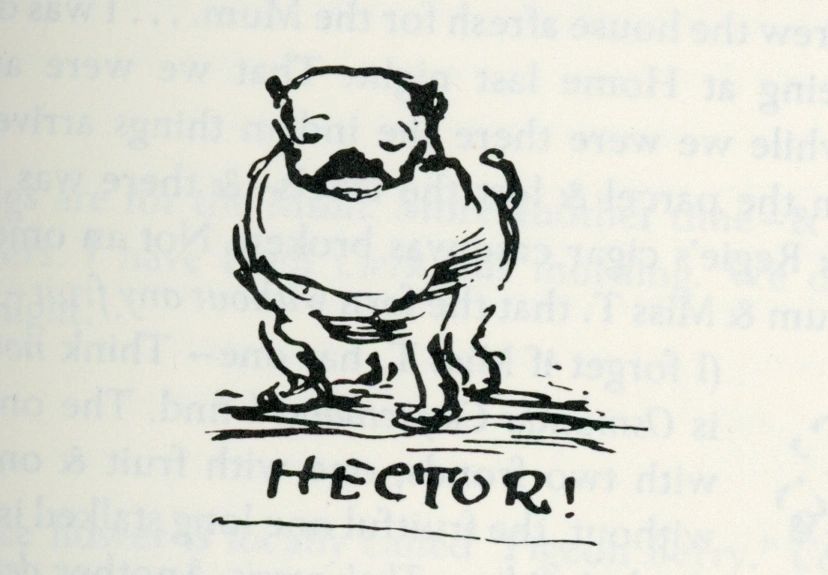
Dogs have been cherished companions for centuries, yet their tales rarely make history. But right here in The Maritimes, the letters of Juliana Horatia Ewing tell of a mischievous bulldog named Hector, offering us a rare and charming insight into the enduring bond between humans and their canine friends.
On her very first day in Fredericton during the summer of 1867, the 28-year-old English author Juliana Horatia Ewing wrote an enthusiastic letter to her sister Dot. In it, she described her encounter that day with a striking Great Dane named — somewhat unimaginatively — "Fredericton":
"He has the loveliest face I ever saw! He goes up [the street] where he lives. When he gets 2 cents given him he takes it in his mouth to the nearest store and buys himself biscuits! I have seen him do it! If you give him one cent he is dissatisfied. Bless his nose!”
Shortly after, she met the dog that would steal her heart: Hector.
“Dottie! … Tell the mum!" Juliana announced in a letter. "I have fallen head over ears in love with another dog! Oh, bless his nose! He is a white pure bulldog. His face is broad and round and delicious and ferociously good-natured and affectionately ogerish. The moment I saw him I hugged him."
She assumed he was owned by a soldier. Two weeks later though, she learned that Hector’s owner was actually 22-year-old Georgina Parry.
Juliana asked Georgina to dance. While dancing she asked permission to get her photo taken with her dog. Georgina said she could try.

In the early days of photography, cameras required subjects to remain perfectly still for up to 30 seconds to avoid a blurry image. Hector had never successfully been photographed before.
Juliana mailed the photo home with an explanation of her own tense pose:
“I was afraid you would think I look ill because of the queer strain and stare I gave. … We sacrificed ourselves to the bulldoggie! As soon as I calmed him the man drew up the slide. Rex muttered “look at the camera” I dared not move myself but twisted my eyes around and gave an agonizing stare. I had calculated that the noise of the slide would fix Hector’s attention and make him think there was a rat or something… I am very proud of the result. He has never been taken properly before.”
The next Spring, Georgina Parry went to England. Juliana volunteered to dog-sit Hector. They got off to a poor sort of start:
“There was a trifling incident yesterday," Juliana wrote shortly after Hector moved in, "where he ate two pounds of cheese, all of my rolls, and snuffed the butter. And another trifling incident today where he upset the ink on the carpet, rolled in it, and established himself on Rex’s Chair.”
Her husband, Rex, was quite a talented singer. Juliana brought Hector to see his concert. This, she wrote, also didn’t end well:
“He howled as I never heard one howl before while Rex was singing … he really seemed to be singing to the best of his ability!”

Juliana also brought Hector to a fancy tea party. Apparently, this was normal because the other guests brought not only their dogs too, but even their cats. Predictably, this did not end well.
Juliana, who, for reasons only known to her, always described cats as “ladies,” wrote:
“In two seconds one lady was on [Hector's] back and the other lady was scratching his poor dear nose … soon cats, plates, and bull doggies were all mixed together in … a heap in the corner!”
Apparently unphased by Hector’s growing track record of rather poor behaviour in public, Juliana brought him to a service at Christ Church Cathedral.
This was no ordinary service, though. The wealthiest and most powerful man in the city, William Hunter Odell, had recently challenged another man to a duel. This was not only illegal but was also considered a sin.
The furious Bishop Medley announced at that service that he was excommunicating Odell. That solemn announcement was interrupted by a certain white bulldog howling, and Juliana wailing: “Hector is behaving awfully! I can’t keep him quiet!”
Bishop Medley didn't mind. He was used to unusual dog behaviour in the Cathedral.
The Great Dane named Fredericton was a regular churchgoer, the Bishop explained to Juliana, "and behaved very well … till the offering. Then he rose and followed after the alms collector waggling his tail as the money clinked in because he wanted his 2 cents for biscuits!”
One day that winter, Juliana didn't properly close the door of her house on Waterloo Row. Hector bolted outside and ran out into the street.
Getting hit by a car was not yet a concern because this was long before they were invented, but there were other things to worry about.
Spying a passing horse, Hector gave chase. Juliana wrote that she ran out after him in her underwear: “I fled to join the melee in slippers and demi-toilette — if you could have seen us all in the snow!”
Hector tried to bite the horse. Instead, the horse kicked him in the face.
“I thought the poor old bull doggie was killed at last!” Juliana exclaimed. “Hector bled frightfully and had a face swollen up like a prize-fighter. But he is better now. Bless his nose!”
Juliana even wrote a little song about Hector, parodying that lobster’s song in 'Alice in Wonderland':
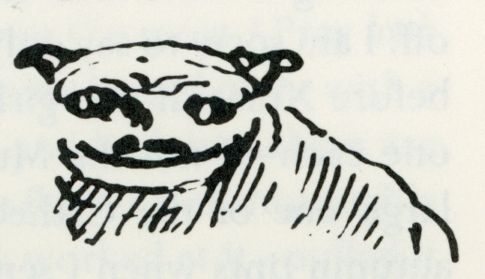
“T’is the voice of the bulldoggie I hear him complain,
You have fed me lately; I must grub again.
As a pauper for pudding – so he for his meat –
Gapes his jaws and there’s nothing a bull doggie can’t eat.”
She described “The beloved bulldog” as “the best behaved and most affectionate hanimal I ever knew.”
But Hector wasn’t her dog. Eventually, she had to give him back.
“Hector is gone! I cried the whole day. … I never did know a dog like him, or love one so much! He was so good and so awfully knowing. I really wish I could forget him. We see him sometimes, but that is almost worse!”
Touched by her friend's love for her dog, Georgina Parry agreed to share Hector. The two women developed a schedule where each took the beloved bulldog for several days of the week.
Read about more of Juliana Horatia Ewing's adventures in Fredericton:
– The Aristocrat & The Canoemaker


